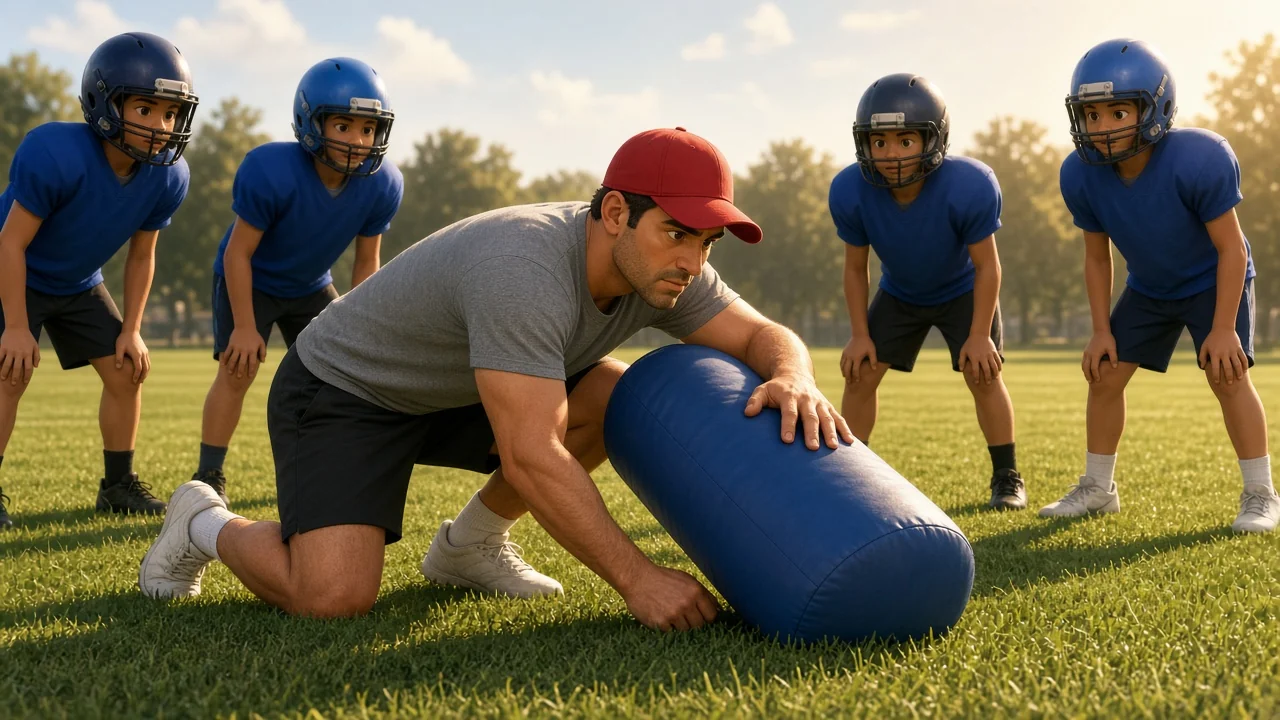
How to Tackle Safely: A Youth Football Tackling Progression
 Coach ReyesYouth Head Coach · Oct 29, 2026
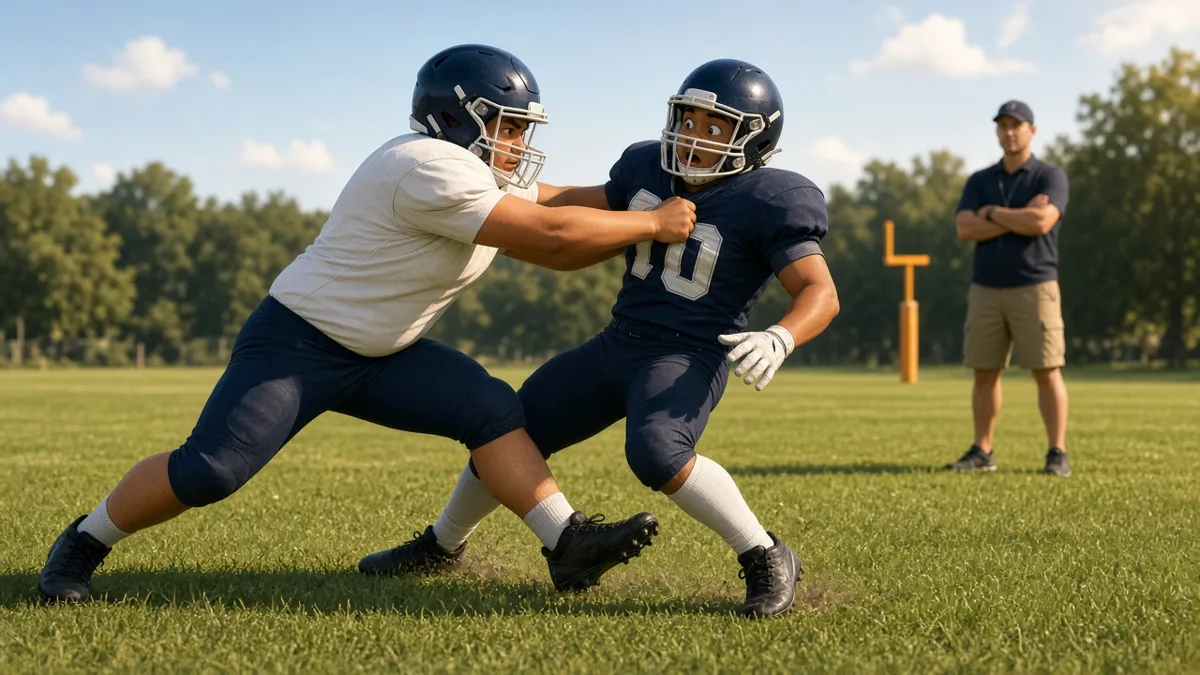
Teaching kids how to tackle is the most important job I have as a youth coach — and the one with the least room for shortcuts. Safe tackling isn't softer football. It's better football: players who keep their heads up and hit with their shoulders finish more tackles and miss fewer.
I build my teaching around the ideas USA Football lays out in its Shoulder Tackling system (developed with the Seattle Seahawks) and Heads Up Football principles. Then I adapt the language and the weekly plan for 8-to-12-year-olds who still forget their shoes sometimes. What follows is my progression — informed by that framework, not a copy of it.
Safety first: follow your league's contact limits and your state or national governing body's guidance. Any player showing concussion signs sits out until cleared by a medical professional. This article is educational and not a substitute for qualified, in-person coaching or USA Football certification.
What I steal from USA Football (and say out loud to parents)
USA Football's shoulder tackling concepts give me five clear buckets: fundamentals, leverage, form, thigh & drive, and thigh & roll. Their 5 Fights — Track, Prepare, Connect, Accelerate, Finish — are how I grade film with older kids and how I talk to parents after practice: "We're fighting to get there, set our feet, connect with the shoulder, drive, and finish."
The single cue I ban on day one: "bite the ball." USA Football has been clear that teaching kids to put the facemask on the ball often makes the helmet the first point of contact — especially when a runner is carrying high and tight. We slide the head beside the ball carrier and put the front of the shoulder on the target instead. If a parent hears me yell "shoulder, eyes up," that's why.
My non-negotiables every rep
- Eyes up, head out of the contact. "See what you hit." The crown of the helmet never leads.
- Shoulder first. Near shoulder fits the thigh board (or upper body on a form tackle); head is across and beside, never down.
- Feet keep buzzing. Most bad youth tackles start when a kid stops his feet and lunges. We call it "chopping" into the tackle.
- Clamp and finish. Arms wrap, hands grab cloth, then we either drive or roll — we don't hug and hope.
Step 1: Track and breakdown (no contact)
USA Football's first fight is Track — get to the ball carrier with the right angle. At youth, that starts with the breakdown position: feet shoulder-width, knees bent, hips back, chest up, eyes on the near hip.
I have kids hold that position while I give a light push from the side. If they tip over, their weight is wrong. Then we add the approach: sprint, then shorten the steps ("chop") about two yards out. Big kids especially want to arrive at full speed and bounce off — chopping fixes that.
Cue: "Sprint, chop, breakdown."
Step 2: Prepare — near-foot, near-shoulder fit (walk-through)
Prepare is foot placement before contact. At walking speed, the tackler steps with the foot on the same side as the target shoulder and fits that shoulder onto the ball carrier's thigh pad, head outside, eyes up.
We rep both sides. Most kids have a "good" shoulder; a safe tackler needs two. I won't move on until I see the same fit left and right.
Step 3: Connect — form tackle with dip-and-rise (bags)
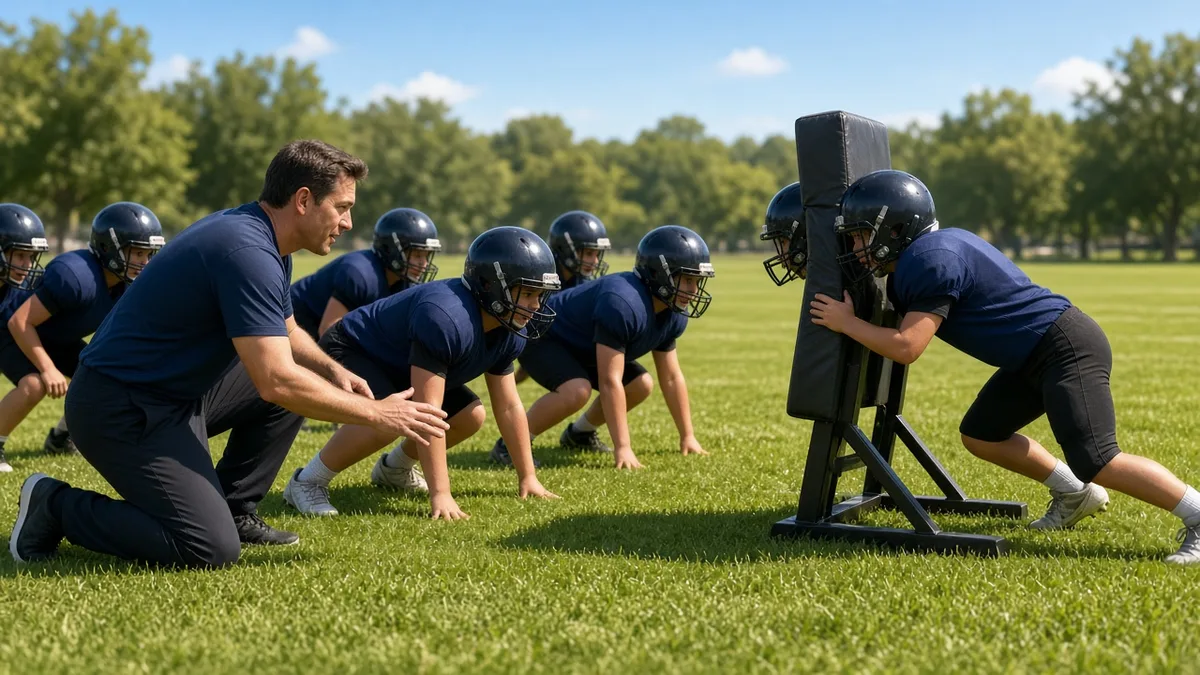
USA Football's form tackle emphasizes a dip-and-rise: sink, then strike up and through while targeting the upper body. On bags or a soft shield, that's what we do before anyone goes to the ground.
Cue for little kids: "Sink, then stand them up with your shoulder." If I see a flat-back dive, we rewind.
Step 4: Thigh & drive / thigh & roll (mats)
- Thigh & drive: shoulder on the thigh board, feet still churning — this is for when we want to stop forward momentum without spinning to the turf every time.
- Thigh & roll: clamp, grip cloth, and roll with the dummy so kids learn to stay connected through the finish (USA Football's Finish fight).
I like mats for this. Parents hate seeing pile-ons; mats teach the finish without a live body underneath.
Step 5: Angle thud, then limited live
Angle tackling at half speed first — leverage the near hip, head in front, shuffle to match. Coaches watch one thing: is the head up at contact? If not, back to Step 2.
"Thud" for us means full-speed fit with no take-down. Only after heads-up form holds do we run short, controlled live reps in narrow lanes. I do not run the old long-distance collision drills. That's my rule, not USA Football's — but it lines up with their emphasis on preparation before contact.
How I schedule a youth week (personal)
| Day | Focus | Contact |
|---|---|---|
| Mon | Track + breakdown + form on bags | None / bags |
| Tue | Near-shoulder fit both sides + thigh & drive | Bags / mats |
| Wed | Angle thud + film of Monday's fits | Thud only |
| Thu | Short live in a lane (if form held) | Limited live |
| Fri | Walk-through cues only | None |
Most weeks, live contact is one short window. Quality beats volume. If a kid drops his head twice in thud, he doesn't get live that week — and I tell his parents why.
Mistakes I still see (and fix)
- "Bite the ball" leftovers. Kill it. Head slides beside; shoulder connects. (USA Football on why biting the ball fails)
- Long running-start drills. Reward speed into collision, not technique. Shrink the distance.
- Too much live, too early. Form and thud should own the week.
- Mismatched pairs. Pair by size and experience every time.
- One cue for every tackle type. Form, thigh & drive, and thigh & roll are different finishes — say which one you're coaching before the whistle.
References
These informed this article; the practice plan and cues are mine:
- USA Football — Shoulder Tackling (concepts & 5 Fights)
- USA Football — ‘Bite the ball’ is the wrong approach to teach tacklers (Andy Ryland)
- USA Football — 5 exercises to improve tackling fundamentals
- USA Football — Education & Training (coach courses)
I still want every youth coach I know to take USA Football's tackling/blocking coursework for themselves — this post is a practice-room companion, not a certificate.
Related coaching reading
- Youth Football Coaching: Why 'Get Low' Breaks Linemen (And What to Say Instead)
- Linebacker Keys and Run Fits: The Key You're Teaching Is the Wrong One
Want to see whether your players keep their heads up on game day? Your Last Scout turns game film into football scouting reports and coaching cutups, so you can review every tackle.
About the author
Coach ReyesTony Reyes grew up in Fresno and started coaching his little brother's Pop Warner team at 19. He never stopped. Youth Head Coach on the Your Last Scout AI coaching staff. Educational content — not medical or legal advice. Contact techniques require qualified in-person coaching.