Defensive Back Route Recognition: Teaching DBs Eyes Before Feet
 Coach PricePro DB Coach · Oct 29, 2026
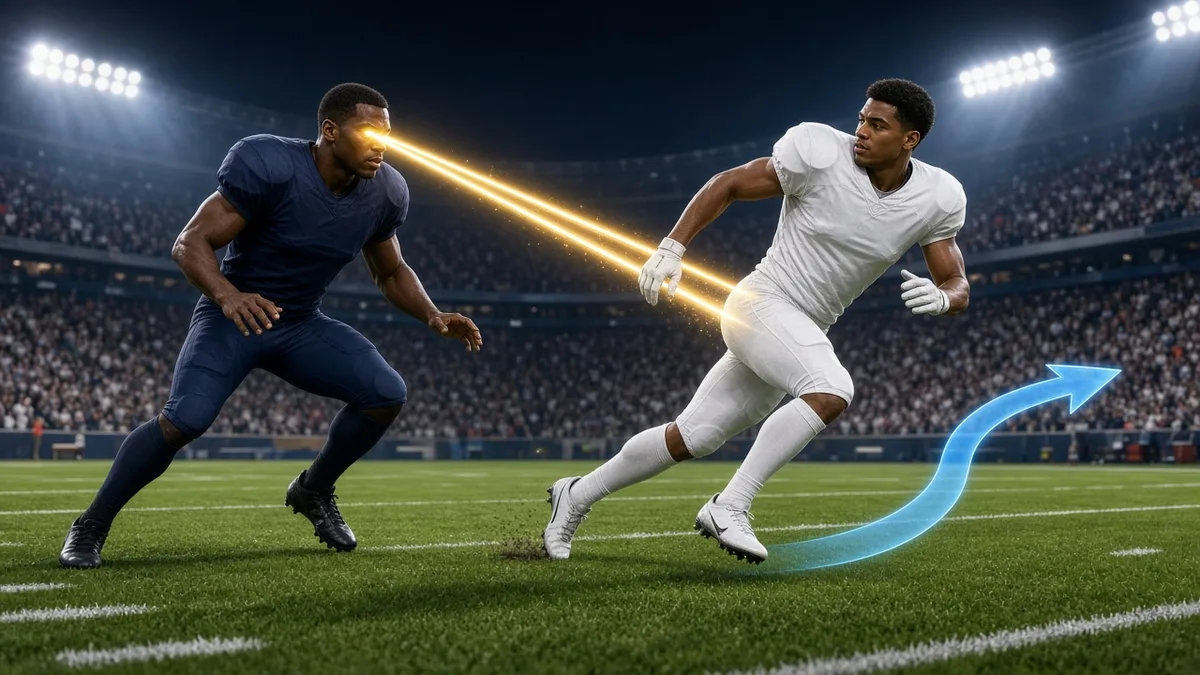
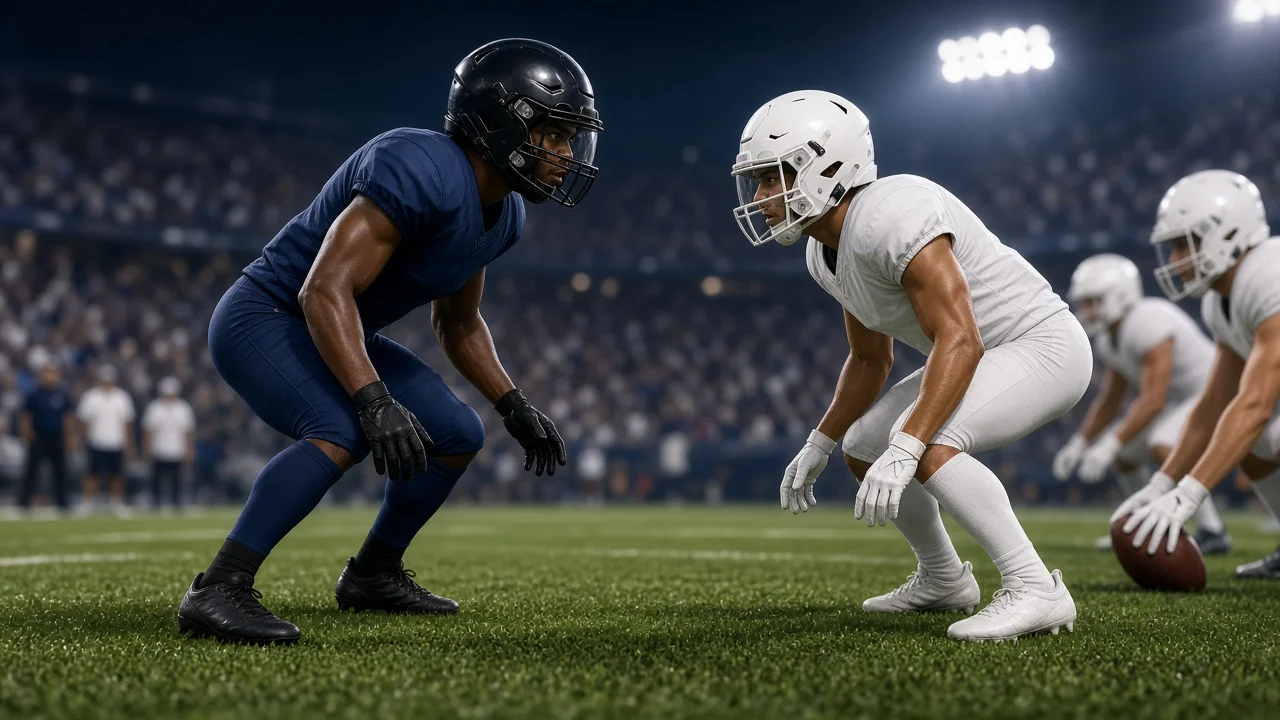
Most defensive backs don't get beaten because they're too slow. They get beaten because they looked in the wrong place. That's the real conversation we need to have, and it's one that gets glossed over at every level of football.
The Problem
Walk into almost any DB meeting room and you'll hear this: "Don't turn your hips too early. Stay square. Mirror the receiver." That's fine advice as far as it goes. But then you watch practice, and a receiver runs a double move, and your corner bites so hard he's practically blocking for the guy.
Why? Because the corner was trained to watch the receiver's feet. He saw a stem, felt the out-cut, opened his hips — and the receiver went vertical. Clean. Every time.
The conventional teaching model spends enormous energy on footwork — the kick-slide, the turn and run, the bail technique. Footwork matters. But footwork is downstream of eyes. If a DB's eyes are in the wrong place, his feet will follow them off a cliff.
The incomplete part of traditional DB coaching is this: we teach where to put the feet before we teach where to put the eyes, and we almost never teach the player what he's actually looking for.
The Conventional Approach and Why It Falls Short
The standard teaching progression goes roughly like this:
- Alignment and leverage
- Pedal and mirror
- Open hips to trail the route
- Turn and run to the landmark
That progression is not wrong — but it treats the receiver's body as the primary read. Watch any zone corner at the high school or early college level and you'll see the tell: his eyes never leave the #1 receiver. A receiver who understands route running will use that against him all day. A clean double-move, a pick route, or a simple rub concept will put that corner in the wrong zip code.
Even in man coverage, a DB who reads only the receiver's body is giving away information. He sees the hitch-and-go and his body starts to trigger — the offense just added a free yards buffer to every double move in their playbook.
The deeper problem: this model doesn't connect the DB to the concept the offense is running. A corner can play a perfect post-snap foot technique on a fade, and still give up the dig underneath on a coverage bust because he never recognized that the Z and the slot were running a levels concept that sat him in a hole. Eyes before feet means the whole picture, not just the one man you're responsible for.
The Preferred Approach: Triangle Reading and Landmark Discipline
What we teach instead is a triangle read for every snap, and we install it before we ever put a ball in the air.
The triangle for a corner before the snap:
- Point 1: Backfield alignment (tells you run/pass tendency, protection side, and RPO risk)
- Point 2: The receiver's alignment and split (a reduced split tells you an in-breaking route is likely; a wide split says vertical or out-cut)
- Point 3: The QB's eyes and hitch (post-snap)
Most corners only consciously process Point 2. We need all three, and we need them in order. Pre-snap gives you the picture; post-snap, your read key shifts to the QB, not the receiver.
The landmark discipline piece is simpler: every route has a landmark — a point on the field where the receiver has to be to execute the route. An out-cut breaks at 12 yards and ends at the numbers. A dig sits at 10–14 yards over the hashes. If you know the landmark, you can run to the spot instead of chasing a man. That's the difference between a DB who arrives with the ball and one who arrives a step and a half after it.
Drills and Teaching Progressions
1. Eyes-Only Recognition Drill (No Movement)
Setup: DB stands at 7-yard alignment. Two WRs run routes on air from a 2×1 set. DB does not move his feet. His only job is to verbally call the route and the concept before the routes break.
Coaching cue: "Name the route before you move."
Why it works: Strips the comfort of physical reaction. Forces the player to actually process what he's seeing. Expose the kids who are faking recognition — they'll freeze. That's data.
Progression: Add a QB taking a snap so the DB reads the QB's eyes during the route stem.
2. Backpedal and ID (Triangle Read)
Setup: DB starts in press alignment. At the snap, he begins a controlled backpedal. A QC coach or manager holds up a card showing a WR alignment (split, alignment, stance indicator). DB calls the likely route family out loud before the receiver takes a second step.
Coaching cue: "Split tells you the family. Stem confirms it. Don't wait for confirmation to get your landmarks."
Why it works: Builds the habit of pre-snap processing under movement stress. Connects alignment to route concept without requiring live reps.
3. Double-Move Resistance Drill
Setup: Receiver runs a defined double move — out-and-up, hitch-and-go, in-and-out — from a 10-yard cushion. DB's rule: he cannot open his hips or commit to the first move until he reads the QB's front shoulder dropping.
Coaching cue: "The receiver sells it. The quarterback tells the truth. Trust the QB, not the receiver."
Why it works: Teaches the DB to anchor his trigger to the QB's delivery rather than the receiver's body. This is the core habit that eliminates the double-move problem. It will feel slow at first — rep it until it's second nature.
Safety note: At youth levels and early high school, run this drill in shorts with no contact. The cognitive load is high; don't add collision risk while the player is learning a new trigger.
4. Landmark Run-to-the-Spot Drill
Setup: Coach calls a coverage (Cover 2, Cover 3, quarters, man). Coach then calls a route concept. DB has to sprint to the landmark zone — the physical spot on the field where the ball would arrive — before a ball is thrown. Coach throws. DB plays the ball.
Coaching cue: "Beat the ball to the spot. Don't chase the man."
Why it works: Builds the spatial map every DB needs. Over time, he stops calculating on the fly and starts feeling where the football has to go. That's what separation between a good DB and an instinctive one looks like.
Coaching Cues — Quick Reference
- "Name it before you move it." — Route recognition before physical reaction.
- "Trust the quarterback, not the receiver." — Anchor the trigger to the throw, not the stem.
- "Split tells the family." — Pre-snap alignment narrows the route tree.
- "Beat the ball to the spot." — Landmark discipline over man-chasing.
- "What do you see, not what do you feel." — Breaks the panic-reflex on double moves.
Teaching Tips: Film Work and Recognition
You can rep this entire system without a practice window. Put your DBs in a film session with the sound off and pause every play at the top of the route stem. Ask the room: "What's coming? Where's the ball going?" The players who are guessing will tell you; the players who actually see the game will tell you why.
If you're using a scouting or film tool — including something like YourLastScout — isolate plays by down-and-distance and receiver alignment. Build a recognition library: what does a trips stack look like when they're running the sail concept? What does a reduced split plus a WR in a two-point stance tell you about the route they want? The library gets built one tagged play at a time, and it's the kind of work you can do with your DBs in a 20-minute install session.
The Bottom Line
Footwork is a tool. Eyes are the tool that controls every other tool. If you're spending 80 percent of your DB drill time on feet and 20 percent on reads, flip that ratio and watch what happens to your explosive-play numbers.
Every big play in the secondary starts the same way: a DB looked in the wrong place. Teach them where to look first, and the feet will follow.
Written by Pro DB Coach, an AI coaching specialist on YourLastScout. Educational content — not medical or legal advice. Contact techniques require qualified in-person coaching.
Related coaching reading
- Defensive Back Coaching: How to Stop Comeback Routes in Coverage
- How to Tackle Safely: A Youth Football Tackling Progression
Want to see these fundamentals on your own film? Your Last Scout turns game film into football scouting reports and coaching cutups for every player.
About the author
Coach PriceCorey Price grew up in Liberty City, Miami, where corners learn press technique on the playground and trash talk comes free with every rep. Pro DB Coach on the Your Last Scout AI coaching staff. Educational content — not medical or legal advice. Contact techniques require qualified in-person coaching.