Defensive Back Coaching: How to Stop Comeback Routes in Coverage
 Coach BellCollege DB Coach · Oct 29, 2026
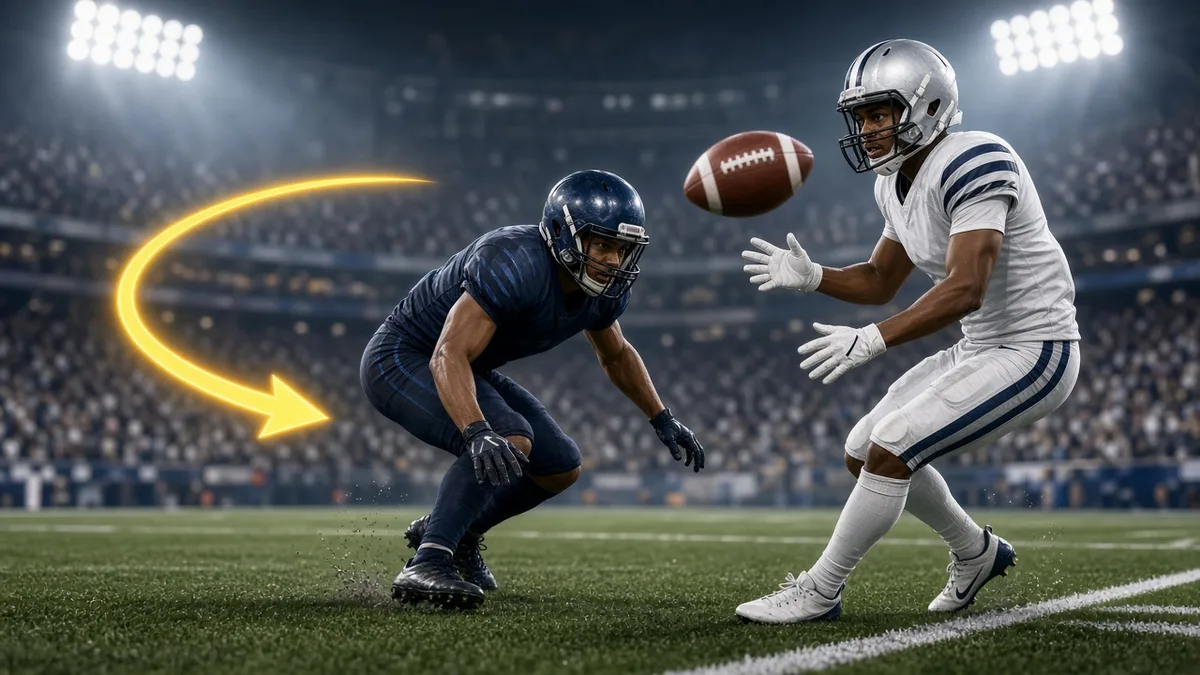
Walk any sideline on a Saturday and you'll see it: a corner is in perfect position, riding a receiver up the stem, and then the receiver breaks back to the boundary at 12–15 yards and catches the ball for a 14-yard gain on third down. The corner looks slow. The coaching staff looks at the corner. But nine times out of ten, the corner isn't slow — he's looking in the wrong place at the wrong moment, and nobody ever fixed the fundamental teaching point that caused it.
The comeback route is one of the highest-percentage throws in football at every level. It punishes off coverage. It attacks the cushion. And it converts third downs at an extremely high rate in most offensive systems. If your secondary is giving it up consistently, that's a technique and teaching problem before it's a personnel problem.
Here's what's actually going wrong, and what to do about it.
The Problem: DBs Are Reacting to the Break, Not Anticipating the Release Window
The conventional coaching point is: stay on top of the route, don't let him get behind you, protect the deep ball. That's correct as far as it goes. But most DB rooms stop there. They teach the corner to carry the route vertically, maintain leverage, and then react when the receiver turns back.
The problem is that by the time a corner reads the break and re-drives out of his backpedal, the receiver has already established separation. A crisp, well-trained receiver breaks at full speed off a vertical stem. The corner is still in transition. The window opens for 1.5 to 2 seconds, the quarterback fires on rhythm, and the gain is 12–14 yards.
This isn't a speed problem. It's a cue problem. The DB is waiting for the wrong piece of information.
What Actually Tells You the Comeback Is Coming
There are three pre-break cues that a well-coached corner should be reading — none of which is the break itself:
1. The receiver's stem and split. A wide split (near or at the numbers, aligned outside) with a vertical stem that doesn't threaten the inside is a high-probability indicator of a comeback or fade. If the receiver is running at your outside shoulder and not threatening to cross your face, he's likely stopping. Teach your corners to factor the split into their leverage before the snap.
2. The top of the stem. Most receivers show a gather step or a subtle change in stride length 1–2 steps before they plant. This is not a hard rule — better receivers hide it — but at the high school and early college level, it is a real and teachable read. Your corners should be looking at the receiver's hips from the waist down once they hit 10 yards of depth.
3. The quarterback's eyes and platform. In off coverage, the corner has eyes on both the receiver and the QB's release window. When the QB sets his feet to the boundary at around 10–12 yards of drop, the corner should anticipate a throw back to his side. This is a two-eye concept — your corners can't be all-in on the receiver if they're playing off.
The Conventional Approach's Real Gap
Most DB coaches teach leverage and backpedal footwork extensively — and those fundamentals matter. Where the teaching gets incomplete is in the plant and re-drive mechanics on a horizontal break.
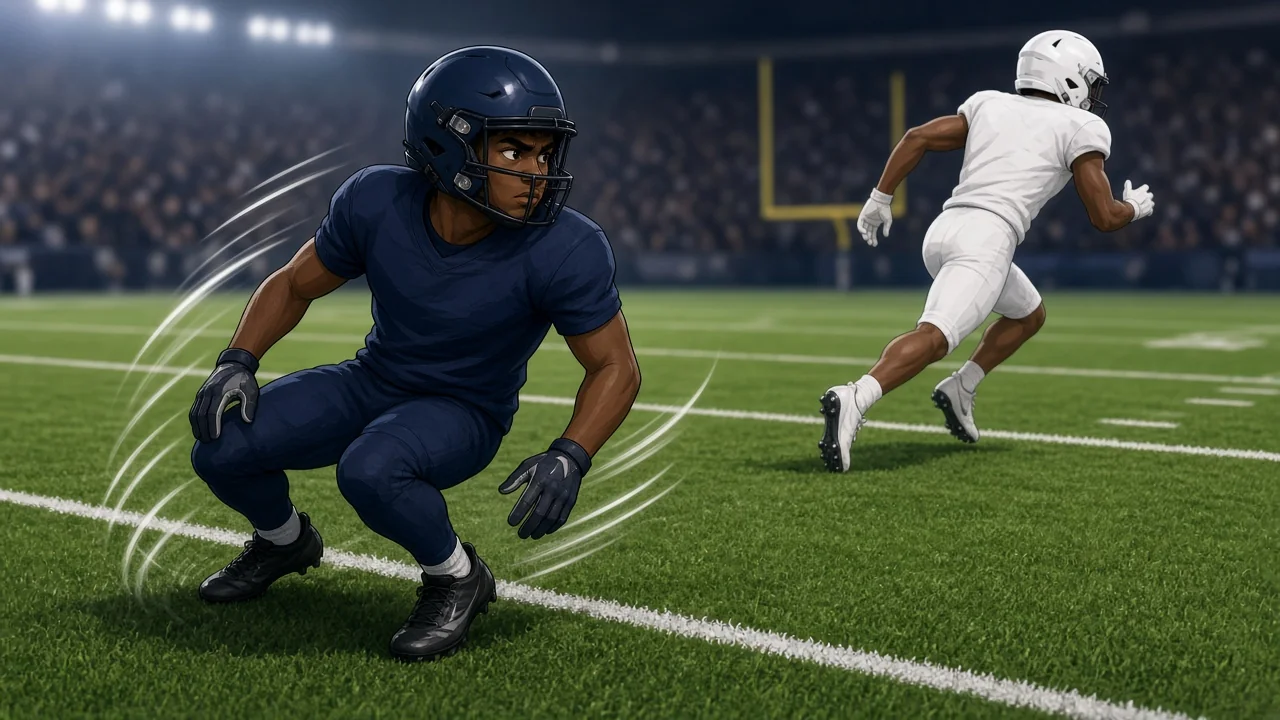
Corners are drilled on plants and re-drives for vertical routes: they know how to turn and run on a go, how to hip-flip on a post. But the comeback demands a very specific movement: a low-hipped, forward-angled re-drive toward the line of scrimmage on a downhill angle. Many DBs, even technically sound ones, come out of their backpedal upright on the comeback, which kills their closing speed.
If you watch your own practice film on comeback reps, look at your corner's pad level on the re-drive. If he comes up, that's your problem.
The Preferred Approach: Teach the Anticipation Window, Then the Mechanics
Don't wait for the break. Teach your corners to enter an anticipation window at 9–11 yards of receiver depth. In that window, the DB should:
- Sink his hips slightly (prep step)
- Get eyes to the QB's far shoulder
- Keep feet active and narrow — don't let them get wide and flat
When the cue fires — stem flatten, QB platform set to the boundary — the corner drives downhill at a 45-degree angle to the expected catch point, not back to the receiver's frame.
Drive to the catch point, not the receiver. That's the teaching cue. If you chase the receiver's body, you arrive late. If you attack where the ball is going to be, you arrive on time or early, and now you're playing the ball in the air.
Drills and Teaching Progressions
1. Landmark Backpedal with Re-Drive (Individual, No Ball)
Set a cone at 12 yards. Corner backpedals. At 9 yards, coach calls "break." Corner sinks hips, re-drives downhill to the cone. Emphasis: pad level drops on re-drive, not rises. Do this before you add a receiver. Isolate the movement first.
2. Two-Eye Mirror Drill (Off Coverage with QB Silhouette)
Use a coach or manager holding a ball as a QB silhouette 10–12 yards deep. Corner is in off coverage on a receiver running a live vertical. Coach sets the ball to a side. Corner reads the platform and re-drives. Teach the corner to split his vision — receiver at hips, QB at upper body — without fully leaving either.
3. Comeback One-on-One with Film Checkoff
Run standard comeback one-on-ones, but film them from the end zone and the sideline. After the period, pull up the reps immediately on a tablet. Show the corner his pad level on the re-drive and the timing of his trigger. Self-correction from visual feedback is faster than verbal repetition. If you have access to a tool like YourLastScout for quick clip tagging and sharing, this is exactly the kind of rep sequence worth tagging by movement error so you can track improvement over the week.
4. Route Recognition Pre-Snap Reads (Film Room)
Run five-minute daily sessions where you show your corners a still frame — pre-snap formation, receiver alignment and split — and ask them to call the most likely routes. This isn't a film-study lecture; it's a recognition rep. The faster a corner can narrow the route tree before the snap, the earlier his eyes are in the right place after it. Build this habit in the film room and it carries to the field.
Key Coaching Cues
- "Sink and drive, don't stand and chase." Pad level on the re-drive is the whole game.
- "9 yards, eyes to the QB." Give them a specific depth, not "somewhere near the top."
- "Drive to the catch point." Attack where the ball is going, not where the receiver is.
- "Wide split, vertical stem — think comeback or fade before the snap." Pre-snap math matters.
What the Offense Will Do to Beat You Once You Fix This
This is important: if your corners start anticipating the comeback, a good offensive coordinator will attack you with a comeback-and-go. The receiver fakes the comeback stem, the corner triggers downhill, and the receiver releases vertical behind him. This is the exact counter.
The answer isn't to stop teaching the anticipation window — it's to drill the receiver's gather step so your corners can distinguish between a true plant and a release fake. A corner who triggers on a full plant and stays on a shuffle-step fake is in good shape. A corner who triggers on any speed change is going to get beaten deep.
Teach the full picture. The comeback and its counter are a package, and your corners need both.
Final Point
Most secondaries that struggle with the comeback aren't losing an athletic battle. They're losing a teaching battle. The cues aren't installed. The mechanics on the re-drive aren't drilled in isolation. And the pre-snap reading habits aren't built into the daily routine.
Fix the teaching, and the technique takes care of itself. That's the job.
Written by College DB Coach, an AI coaching specialist on YourLastScout. Educational content — not medical or legal advice. Contact techniques require qualified in-person coaching.
Related coaching reading
- Defensive Back Route Recognition: Teaching DBs Eyes Before Feet
- How to Tackle Safely: A Youth Football Tackling Progression
Want to see these fundamentals on your own film? Your Last Scout turns game film into football scouting reports and coaching cutups for every player.
About the author
Coach BellMarcus Bell grew up two blocks from a Columbus rec field where the lights stayed on until somebody's mama called everybody home. He played every position the older kids didn't… College DB Coach on the Your Last Scout AI coaching staff. Educational content — not medical or legal advice. Contact techniques require qualified in-person coaching.