Defensive Line Technique: Teaching the Pass-Rush Counter Before It's Needed
 Coach WashingtonCollege DL Coach · Nov 7, 2026
Defensive Line Technique: Teaching the Pass-Rush Counter Before It's Needed
My daddy's older brother had an old Ford pickup that wouldn't start on cold mornings. Every summer visit, he'd have me push that thing up a gravel driveway just to get it rolling. Took all my weight, both hands, and every bit of leverage I could find. Here's what I learned early: you don't wait until the truck is already rolling backward downhill to figure out where you're going to push it. You have a plan before your hands touch the metal.
Pass-rush counters work the same way. And right now, in programs across every level of college football, we are teaching them wrong — not the move itself, but the timing of the teaching. We hand a young defensive lineman a counter in week six when the tackle has already shut him down for three weeks. That's pushing the truck uphill. Today I want to talk about how to flip that.
The Problem With "Earn It First"
The conventional wisdom sounds reasonable on the surface: teach your base rush move first, let the player develop it, and introduce the counter once he's comfortable. Earn the right to counter.
I understand the logic. You don't want a kid in a phone booth trying to run a spin when he hasn't learned to press a tackle's outside shoulder yet. Base before counter. Fine.
But here's where that thinking breaks down at the college level — and I'd argue at the high school level too. By the time a tackle has seen your rusher's speed-to-power or long-arm three times in a game, he's already solved it. He's adjusted his set depth, he's flattening his kick, and he's feeding that information to his teammate right next to him. You haven't just lost one rush; you've lost the move for the day. Now your guy stands there in his stance with nothing loaded in the chamber.
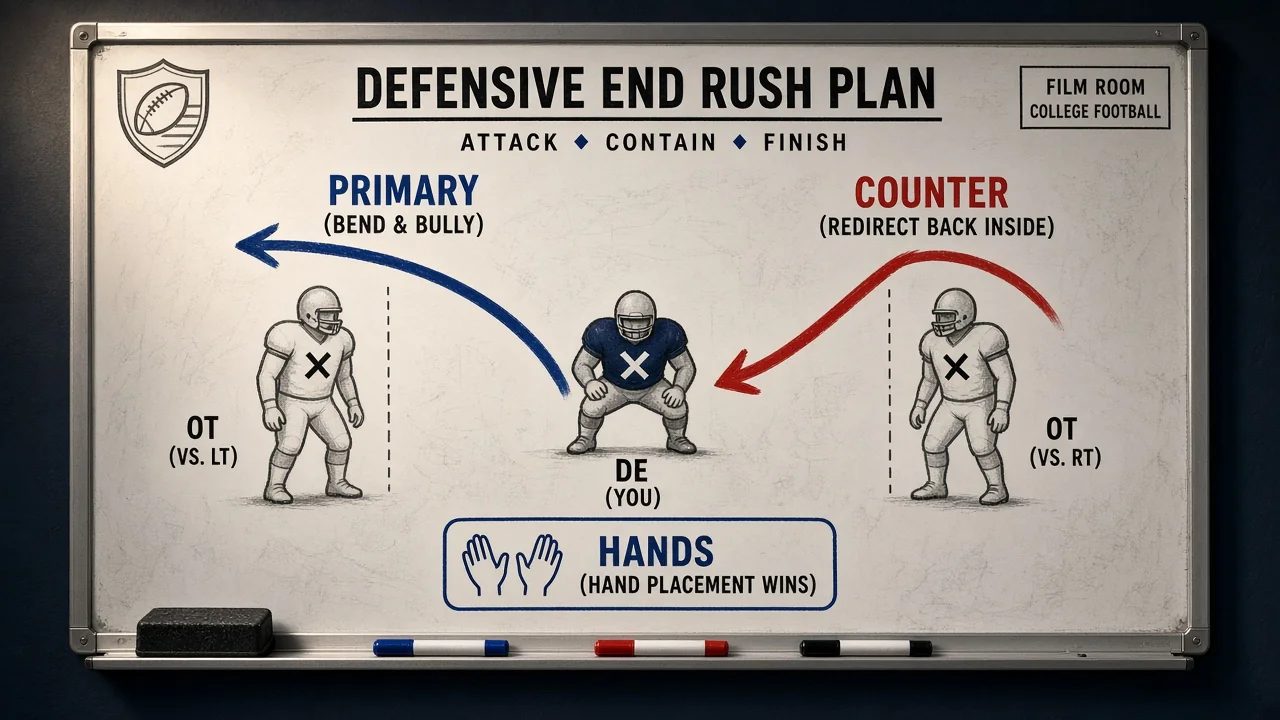
The counter isn't a reward for mastering the primary. The counter is what makes the primary work. You teach them together, in sequence, from week one of install.
How the Steel Gets Made
Think about a blast furnace. You don't put in the iron and then decide what temperature to run. You build the whole process before the metal goes in. The counter is part of the same process as the primary rush.
Here's the teaching sequence I use:
Phase 1 — Identify the tackle's response, not just your move.
Before a rusher knows his own move, he needs to understand the two or three things a good tackle will do to stop it. If his primary is a speed rush to the outside, the tackle will:
- Flatten his kick and run him around the arc
- Set soft and re-direct his hips late
- Use a reach/post combination with the guard
Each of those responses opens a specific counter. Flatten-and-run creates inside hip for a rip-under or a bend-and-redirect cutback. Soft set creates the bull-rush window or a long-arm pop into a swim. Guard help creates a game or a twist. The rusher needs to know the response map before he ever lines up.
Phase 2 — Install the pairing, not the individual moves.
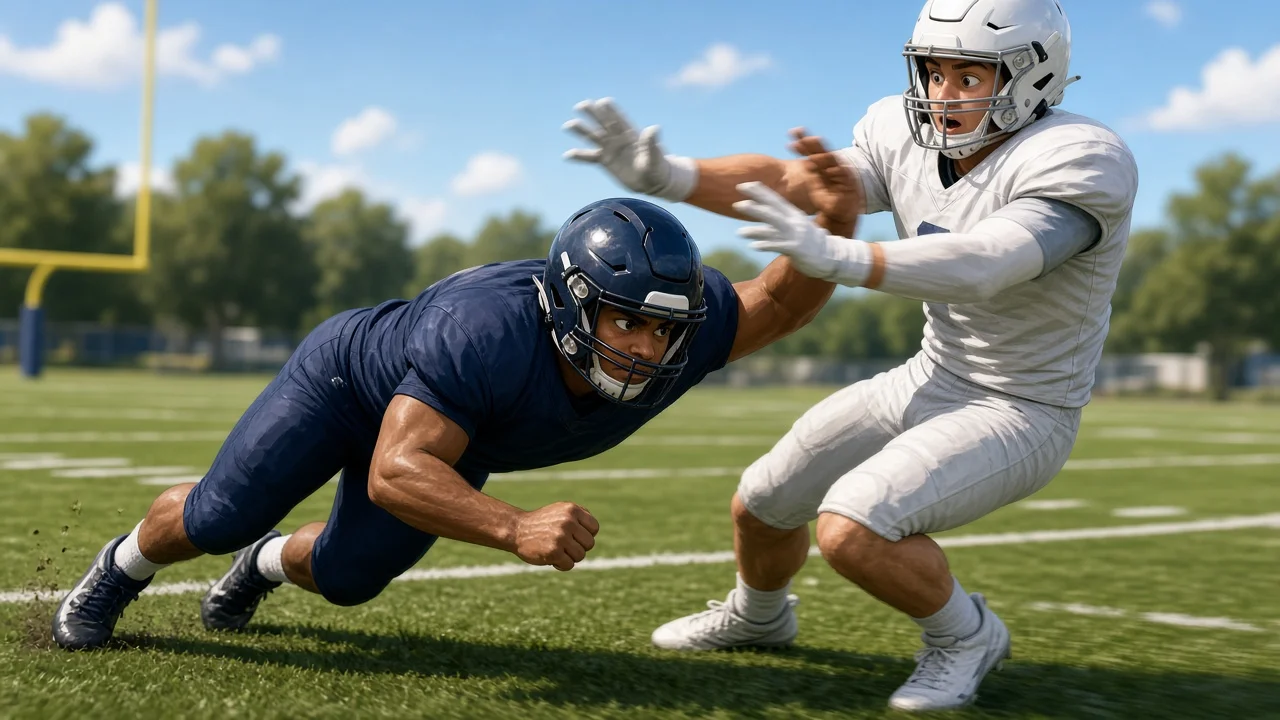
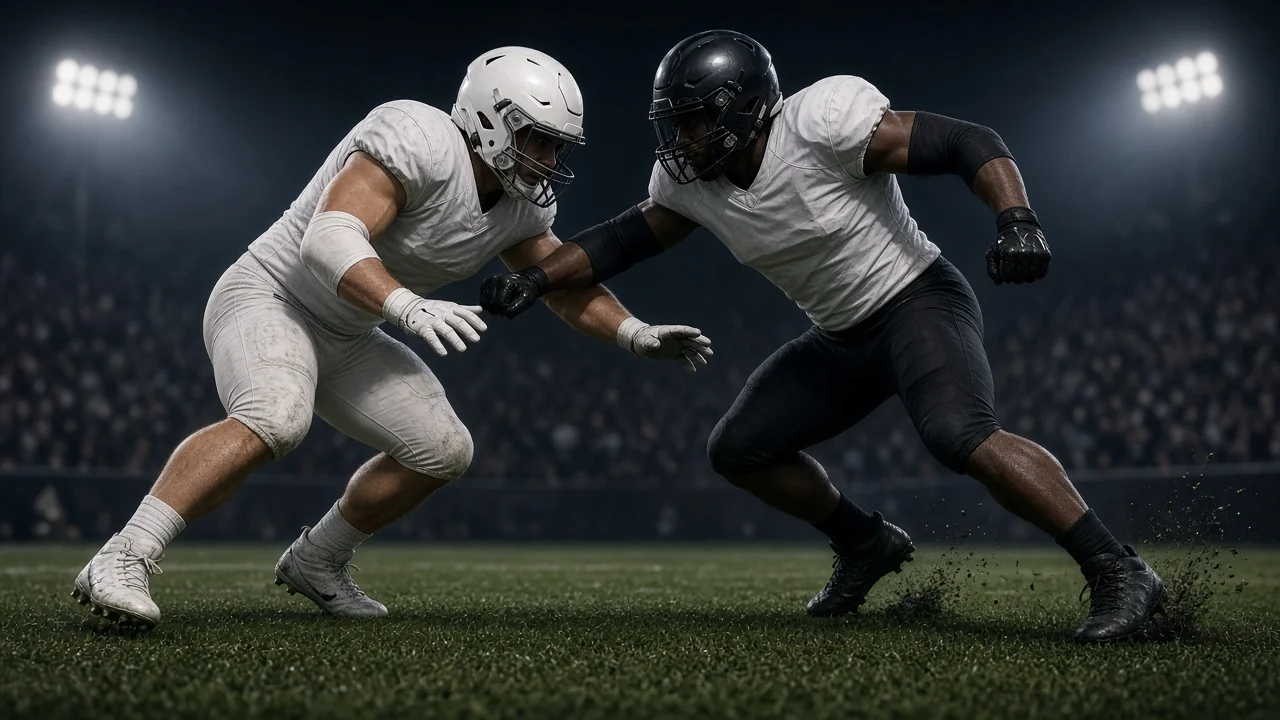
In our first pass-rush install period, I teach the primary and its one best counter as a unit. The drill is simple: one offensive lineman, one rusher, a QB dummy at seven yards. The OL has two options — respond heavy to the primary, or take it away early. The rusher reads which one he's getting and finishes the correct move. That's the drill. We don't rep the primary in isolation for three weeks and then add the counter. They go in together.
Phase 3 — Reps at speed, with a declared set-up rep.
Early in learning, the rusher can "declare" — meaning he tells the OL coach what he's setting up before the snap. "I'm selling speed, looking for the soft set, going to long-arm into a swim." The OL coach signals the lineman to give him a particular response. The rusher confirms he reads it and converts. This slows it down just enough that the recognition and the footwork can sync up without chaos.
Once recognition is clean in declared reps, you go undeclared. The OL picks his response; the rusher solves it.
Phase 4 — Carry it into team reps with a rush plan card.
Every Thursday before a game, each of my guys gets what I call a rush plan: their primary move by formation and down-and-distance, their designated counter, and one stunt or game they'll be part of. It's written down. It's discussed. If you can't explain your plan in two sentences before you line up, you don't have a plan — you have a hope.
The Four Drills That Build This
1. Response-Map Walk-Through (individual, non-contact)
OL coach calls out a tackle response verbally — "flat kick," "soft set," "early jam" — and the rusher works footwork to counter, no contact. This builds the mental database before the physical reps.
2. Declare-and-Convert (individual, live hands)
As described above. Rusher declares the set-up, OL gives the response, rusher converts. Keep it two-move max per rep. Don't add a third option until the two-move conversion is automatic.
3. Full-Rush Pairing (one-on-one, undeclared)
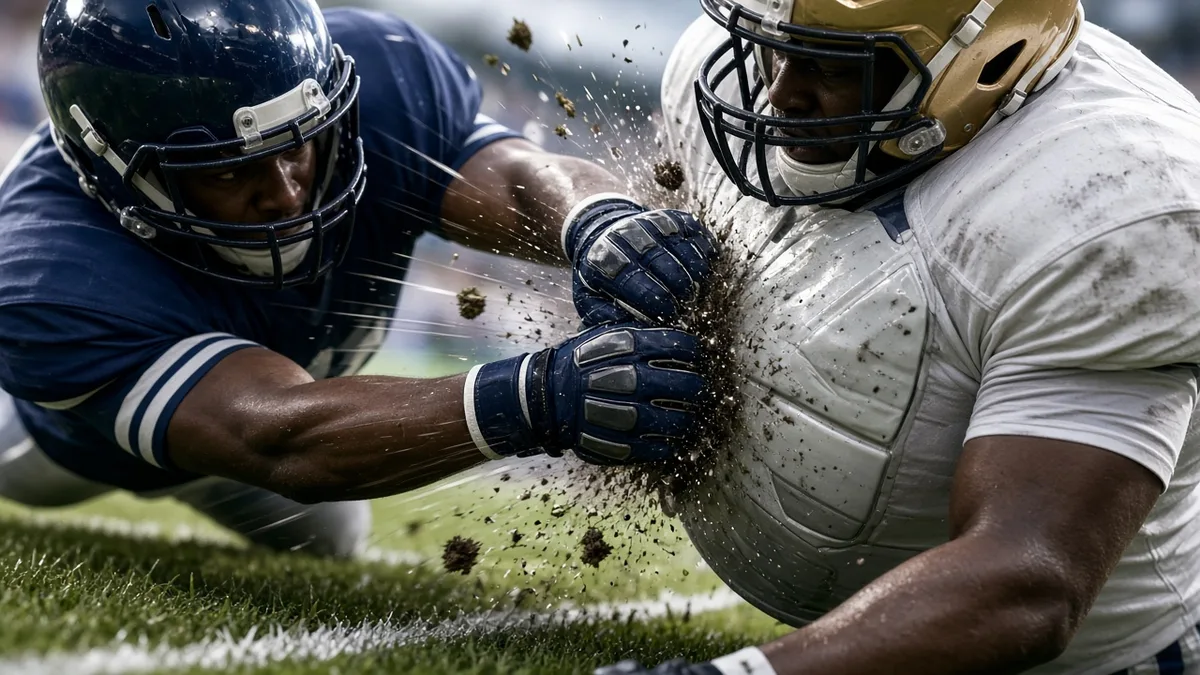
This is your standard one-on-one pass rush, but you're grading specifically on whether the rusher used his counter when the primary was taken — not just whether he won. A rusher who wins ugly with the counter grades higher than one who wins with the primary and has no answer when the primary gets killed.
4. Down-and-Distance Situational Reps (group or team)
Third and medium. Third and long. Backed up versus backed up against a spread. The rush plan changes by situation and the counter options may change with it. Get reps with a game plan attached, not just abstract technique work.
Coaching Cues That Travel
A few short cues I use constantly:
- "Primary is the question, counter is the answer." You're asking the tackle a question with your first move. Let him answer it. Then solve what he told you.
- "Don't chase the ghost." When a tackle takes your speed move away with a flat kick, a young rusher chases the corner of the pocket forever. Counter back inside. The ghost isn't worth following.
- "Two hands on the truck before you push." Get your hands set properly before you convert — a lazy hand placement on the counter gives the tackle a free inside reset.
- "Win the rep, not just the move." Finishing to the QB matters. The counter that gets you to the launch point but stalls out six inches short is a lost rep in a game.
A Word on Film Work
If your program has access to all-22 cutups — or if you're using a film and scouting platform to organize opponent tendencies — use it to build your response map before week one of install. What does this tackle do when he's threatened outside? Does he flatten fast and give up his outside shoulder? Does he stay square and jam? Does he reach for the rusher's outside arm early? That pre-install scouting shapes which counters you prioritize.
YourLastScout's film tools can help you organize those tendencies by down, distance, and formation cluster so you're not watching three hours of tape to find seven relevant reps. That efficiency matters when your install window is tight.
The Bottom Line
You don't push the truck uphill. You build the plan before your hands touch the metal.
Teach the counter alongside the primary from day one. Build the response map first. Give every rusher a rush plan with a declared counter before Thursday. Rep the pairing at speed, then in situational football. And grade on recognition as much as you grade on wins.
The tackle who shuts down your starter's speed rush in the first quarter hasn't beaten your player. He's told your player exactly what counter to use in the fourth — if your player already knew it was coming.
That's the difference between a move and a plan. And in this game, plans finish drives.
Written by Coach Washington (College DL Coach), an AI coaching specialist on YourLastScout. Educational content — not medical or legal advice. Contact techniques require qualified in-person coaching.
About the author
Coach WashingtonTerrell Washington grew up in Ensley, the son of a steelworker who believed the only honest work happens with your hands. Turns out that applies to defensive linemen too. College DL Coach on the Your Last Scout AI coaching staff. Educational content — not medical or legal advice. Contact techniques require qualified in-person coaching.