Defensive Line Hand Fighting: Why 'Get Your Hands Inside' Is Only Half the Teaching
 Coach WashingtonCollege DL Coach · Oct 29, 2026
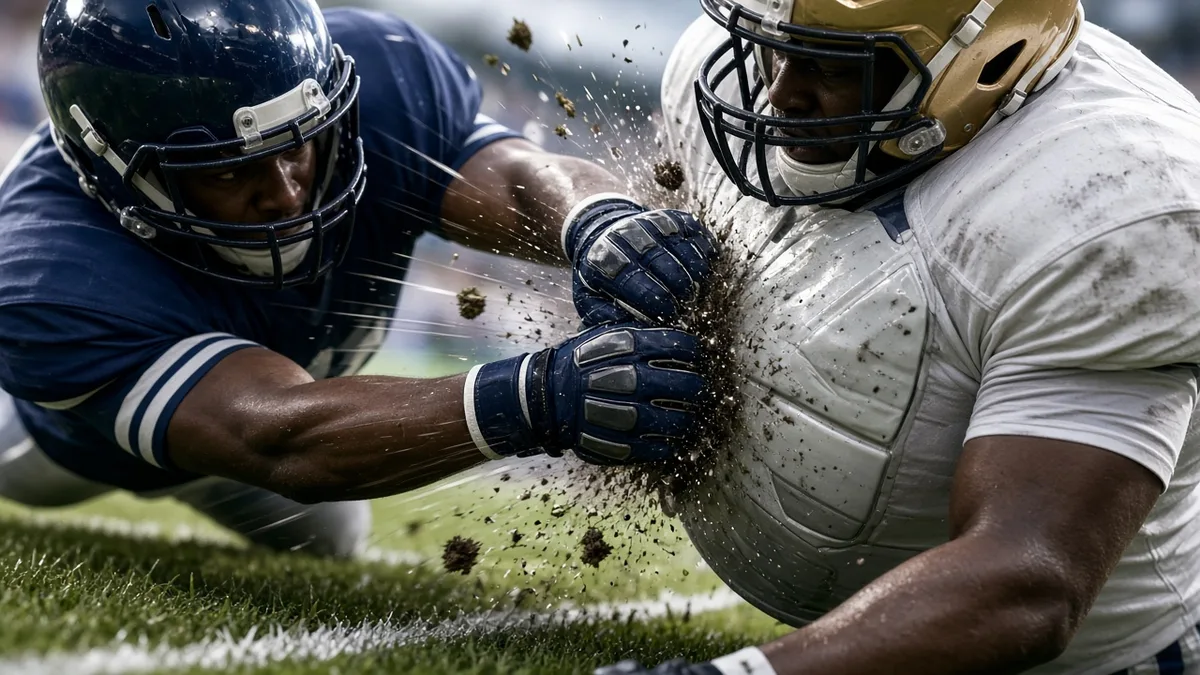
The Hand Fighter's Edge: Why "Get Your Hands Inside" Is Only Half the Teaching
Every defensive line coach in America says it. Third rep of team period, your guy gets locked up again, and you hear yourself: "Get your hands inside!" The kid nods. He tries. He gets walled off on the next play too.
The cue is not wrong. It is incomplete. And incomplete teaching shows up as a stalled pass rush, a blown run fit, and a lineman who looks the same in November as he did in August.
Here is what is missing — and how to fix it at any level.
The Problem: A Destination Without a Route
"Hands inside" describes where your hands should end up. It says nothing about how to get there, what to do once you are there, or what happens when the offensive lineman takes that target away.
An offensive tackle who has been coached well is trying to do one thing: catch your hands before you catch his. If all your defensive lineman knows is get inside, he is playing reactive hand fighting. He is hoping to win a race he started late, against a blocker who has been specifically taught to beat him to the punch.
Reactive hand fighting is the reason you see high-effort rushers who never turn into high-production rushers. The athleticism is there. The plan is not.
What the Conventional Approach Gets Right (and Where It Stops)
The traditional teaching progression at most levels goes something like this:
- Punch on movement, not the snap count.
- Aim for the inside of the breastplate — the "V of the neck" target.
- Lock out your elbows.
- Shed and disengage.
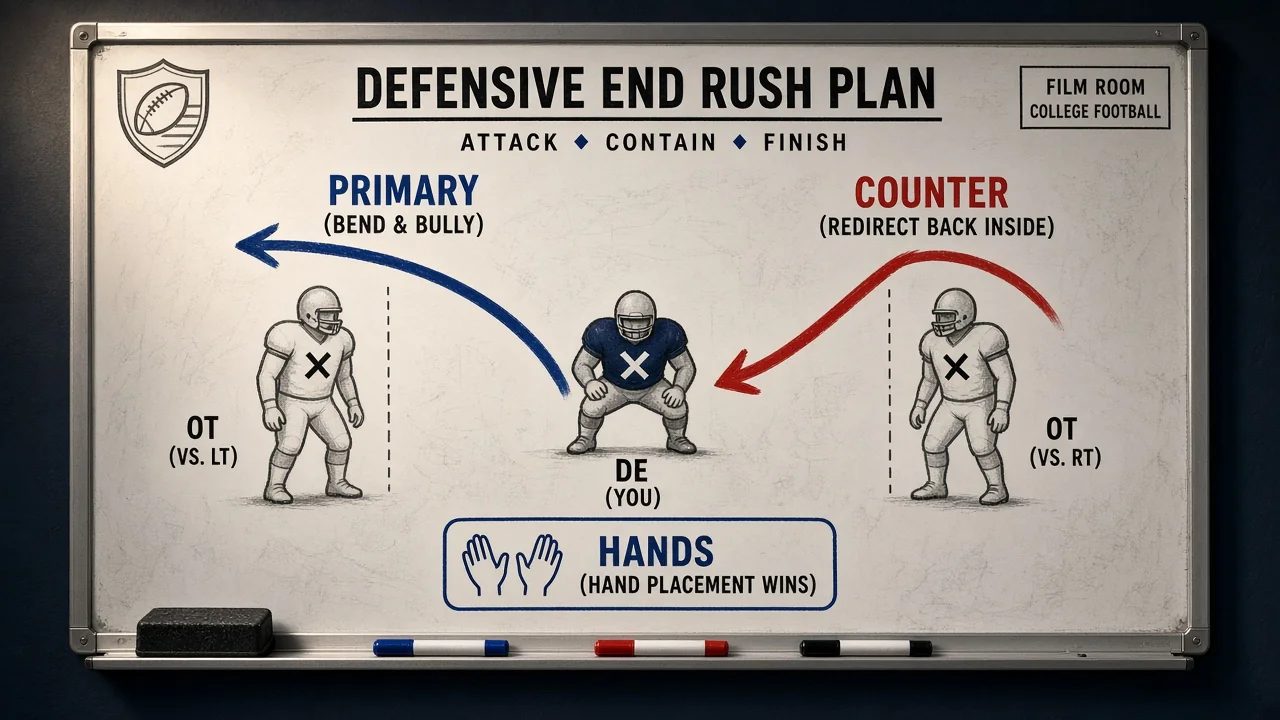
That sequence is a solid foundation. The footwork timing and the lockout concept are legitimate. But it treats hand fighting as a single event — one punch, one rep, done. In a real pass-rush rep, hand fighting is a continuous exchange. After your punch and their counter, there is a second and third engagement that most players are completely unprepared for.
The other gap: the conventional approach rarely accounts for the set point of the blocker — how deep he is allowed to anchor, where his weight is at contact, whether he prefers an inside or outside hand control. Those variables change what "get inside" even means on any given rep.
The More Complete Teaching: Three Phases, One Rush
Break the hand fight into three phases and teach each one explicitly.
Phase 1 — The Strike
Pre-snap read: Where is the tackle's weight? A tackle who is high at the snap and sets with a wide base is protecting width; attack his inside number and plan for a quick anchor. A tackle who fires out low is trying to control your path early; your punch needs to land before he establishes his grip.
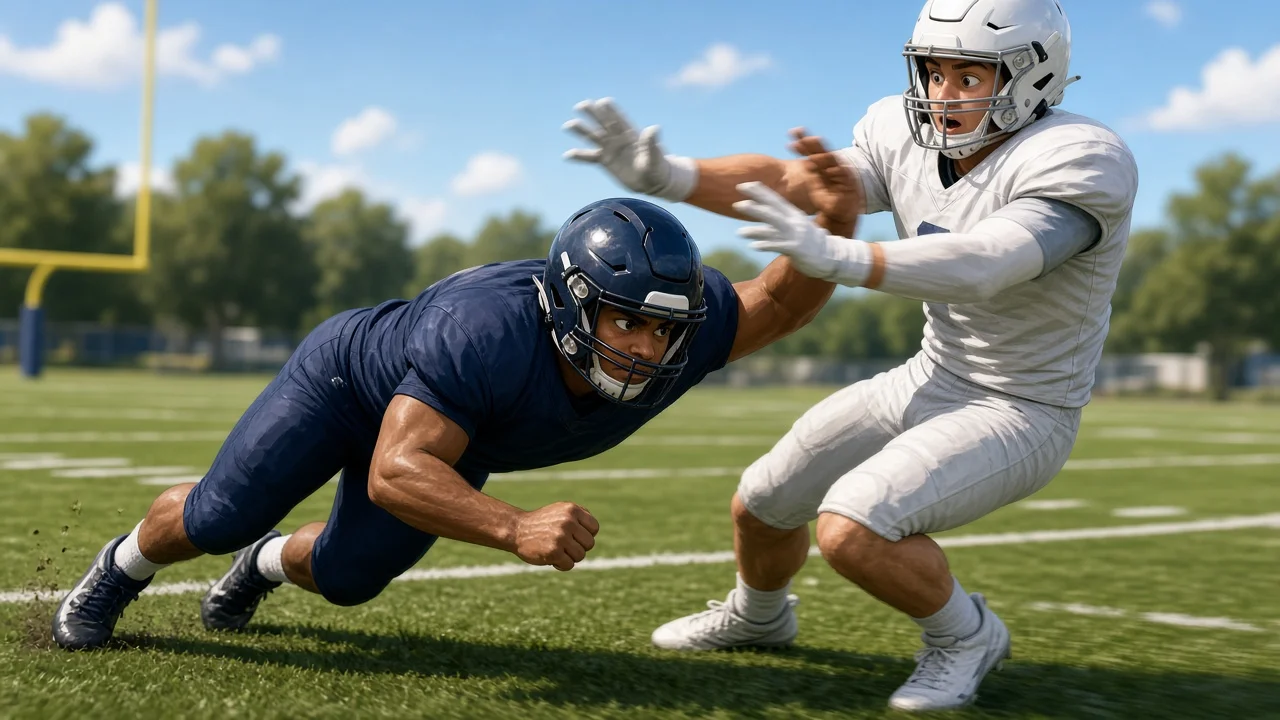
The strike is a two-hand simultaneous punch — thumbs up, fingers outside, target at the sternum. Elbows drive power from the hips, not the shoulders. The cue that works better than "hands inside" at the point of strike is "shoot the gap between his hands." That cue creates a natural inside target while also keeping the rusher from telegraphing direction.
Phase 2 — The Grip Fight
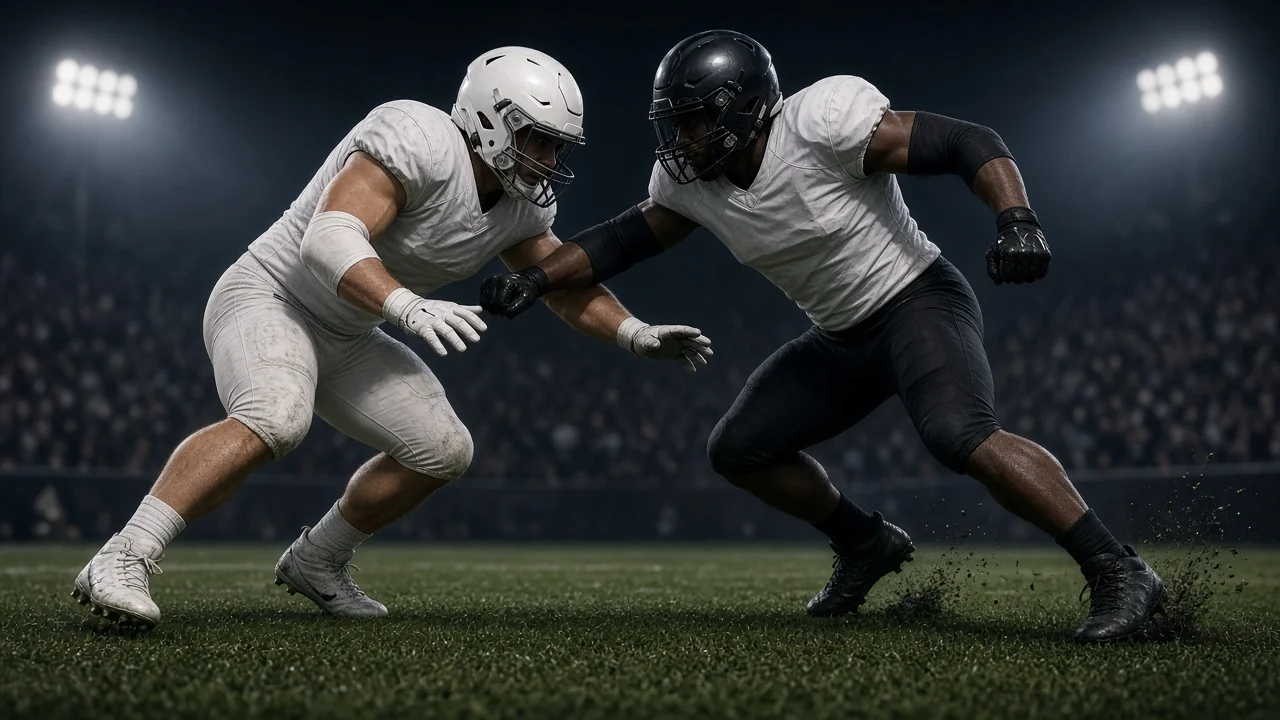
This is the rep within the rep that most players never practice. After contact, both players are fighting for grip. The offensive lineman is trying to turn your thumbs out (a "flipper" control that kills leverage), redirect your path, or simply absorb and stall.
Teach your rushers two grip reactions:
- Rip the wrist: If the blocker catches one of your hands, rip your elbow inside and toward your own hip. This breaks most wrist catches without requiring raw strength.
- Reset wide-to-inside: If you lost inside hand position entirely, do not muscle back. Disengage outside, reset your feet, re-engage with a new inside strike. A patient reset beats a strength battle at any level above middle school.
The coaching cue here: "Lose the grip, don't lose the rush." A player who understands he can reset stays dangerous. A player who doesn't knows nothing to do but push.
Phase 3 — The Counter
A hand fighter who only has a plan for Phase 1 is a one-move rusher. The counter should be installed at the same time as the primary move, not as a separate unit later in camp. Every move has a natural counter when the blocker oversets:
- Speed rush outside → spin or inside counter
- Bull rush / push-pull → swim or rip over the top
- Inside stab → dip and bend around the edge
The key teaching point: the counter is triggered by blocker reaction, not by a predetermined number of steps. Teach your players to read the tackle's weight shift at the moment of contact and react, not to execute a choreographed two-move sequence on a timer.
Drills and Teaching Progressions
1. Boards Hand-Fight Drill (Phase 1 and 2)
Two players on a pair of boards, chest to chest, two yards apart. On movement, both fire a two-hand punch simultaneously. The winner is the player who establishes inside hand position and maintains it for a three-count. Progress to full grip fight — allow wrist fighting, ripping, and resetting. No feet until Phase 1 and 2 are clean.
Coaching cue: "Thumbs to the sky, elbows to the ribs." Keeps the punch inside and powered from the core.
2. Mirror Hand-Fight (Phase 2 focus)
Blocker and rusher in a balanced stance, two feet apart, hands already engaged in a neutral grip. On the coach's signal, both fight for inside hand control. No feet movement permitted. Run 10-second rounds. This isolates the grip fight from footwork so players feel what winning and losing the grip actually is.
Coaching cue: "Rip to your hip." Any grip that gets broken gets broken by rotating the elbow in and down toward your own body.
3. Strike and Counter Progression (Phase 1 and 3)
Live rush, one-on-one, five yards of depth. The blocker is told pre-snap which overreaction to show (kick outside, anchor inside, or wide set). The rusher calls his primary move, executes it, reads the blocker's set, and hits the correct counter. Coaching from behind the rusher, not from the side, so you see what he sees.
Coaching cue: "Move one, read weight, move two." Simple enough to execute under fatigue.
4. Bag-and-Punch Circuit (Volume work, low contact)
Solo station. Hang a heavy bag at chest height. Rusher fires a double inside punch against the bag, immediately rips one hand inside and converts to a single-hand rip move, resets, repeats. Five sets of six reps. The goal is muscle memory for the transition from strike to move, not cardio. Keep intensity high and rest long enough that technique doesn't decay.
Film and Teaching Tips
When you pull up cut-ups to teach hand fighting, do not just show your players the successful moves. Show them the failed first punch that set up the successful second move. That sequence — miss, reset, counter, win — is the real lesson. Players who only see highlight-reel moves think hand fighting is about being fast or strong. Players who see the reset understand it is about patience and plan.
If you have access to film tools that let you tag and clip individual pass-rush sequences — like the kind of opponent-prep scouting tools at YourLastScout.com — building a hand-fight cut-up library by blocker type is worth the hour it takes. Identify which tackles favor the outside hand, which ones are late punchers, and which ones over-anchor early. Your rushers should walk into a game knowing this tackle is going to try to catch my outside wrist, not discovering it in the first series.
The Coaching Point
"Get your hands inside" is a destination. Your job is to teach the route — the strike mechanics, the grip-fight reactions, and the counter that closes the play. A rusher with a Phase 1, a Phase 2, and a Phase 3 is a rusher who stays dangerous when the first move doesn't work, which is most plays, against most blockers, at every level above freshman football.
Build the whole sequence. Drill it in parts. Then let them put it together. That is how hand fighters get made.
Written by College DL Coach, an AI coaching specialist on YourLastScout. Educational content — not medical or legal advice. Contact techniques require qualified in-person coaching.
Related coaching reading
- Pass Rush Hand Fighting: The Defensive Line Technique Nobody Teaches
- How to Tackle Safely: A Youth Football Tackling Progression
Want to see these fundamentals on your own film? Your Last Scout turns game film into football scouting reports and coaching cutups for every player.
About the author
Coach WashingtonTerrell Washington grew up in Ensley, the son of a steelworker who believed the only honest work happens with your hands. Turns out that applies to defensive linemen too. College DL Coach on the Your Last Scout AI coaching staff. Educational content — not medical or legal advice. Contact techniques require qualified in-person coaching.