Pass Rush Hand Fighting: The Defensive Line Technique Nobody Teaches
 Coach ThompsonPro DL Coach · Oct 29, 2026
Mais, come sit down, cher. Pour you some coffee — the dark kind, the kind that'll make your spoon stand up straight. We gonna talk about pass rush.
Every level of football spends practice time on pass rush moves. Speed rush. Spin. Bull rush. Swim. Rip. Coaches rep 'em till players can say the names in their sleep. My nephew Boo can name all five and he's seven and plays flag.
And then those same players get to the tackle, take one punch in the chest, and the move dies right there like a crawfish that didn't purge. Sad. Smells bad. Nobody wants it.
The move didn't fail, no. The hand fight before the move failed. That's the part almost nobody teaches all the way through — and it's the reason talented rushers stall out against good offensive linemen at every level of the game.
The Real Problem: The Punch Wins Before You Do Anything
Here's what happens on most pass rush reps below the pros — and, I'll be honest wit' you, on some pro rosters too:
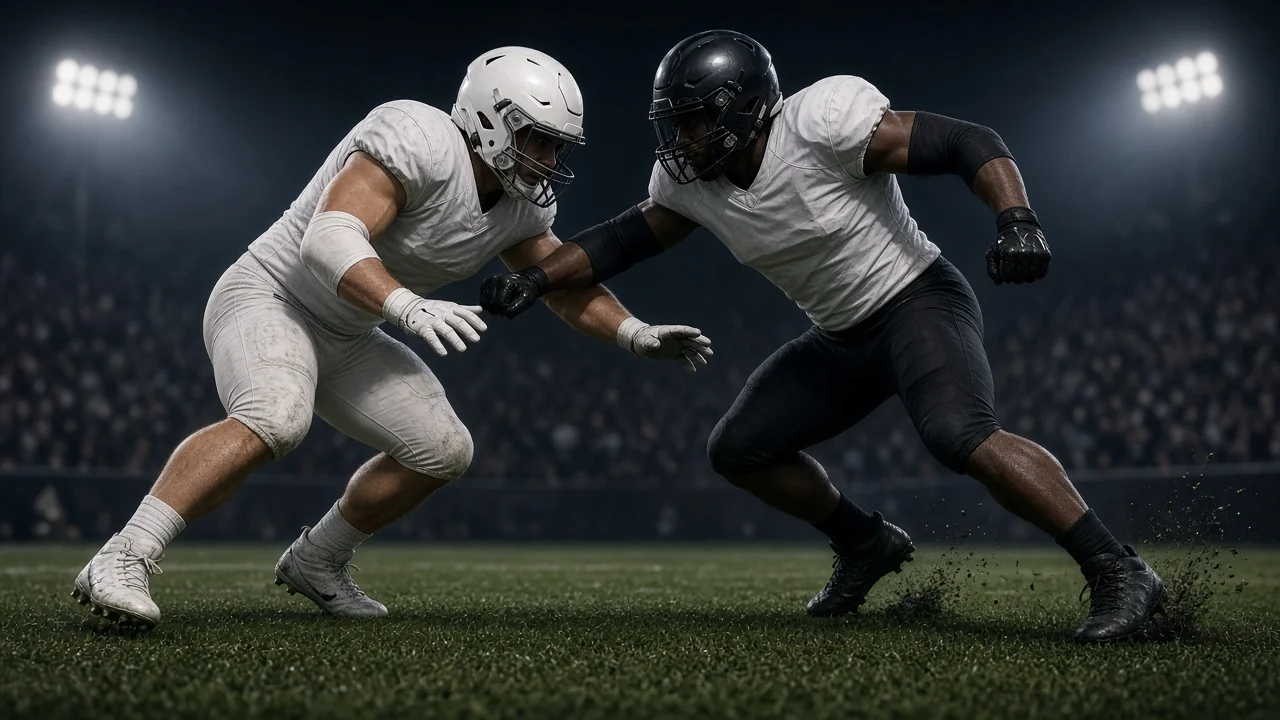
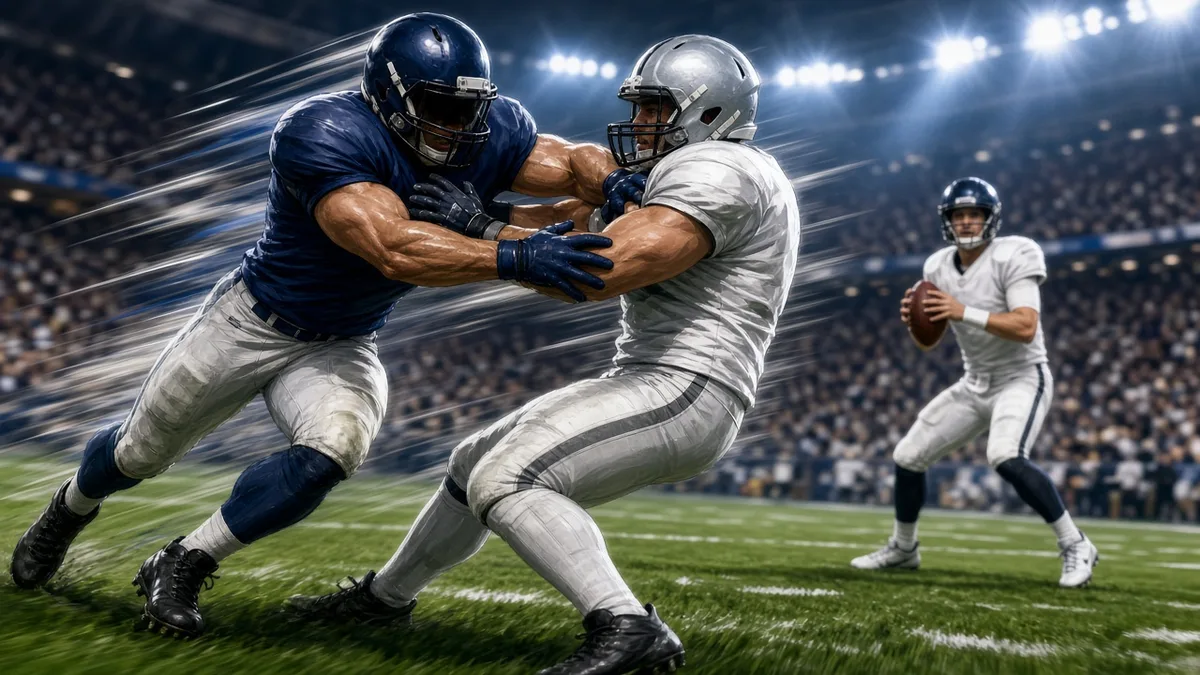
The rusher aligns, fires off at the snap, takes a clean punch from the tackle, and then — stuck. Stuck like a pickup in the mud at the deer lease. Now he's trying to work a spin or a swim from a bad spot with the tackle's hands already inside and locked. Every move from there is low-percentage, because that rusher is already neutralized.
The tackle didn't do nothing fancy. He just landed his punch first.
The teaching gap: Most programs spend most of their hand-fight time on the move itself. The setup — pre-snap hand position, the get-off, the first two steps, the actual engagement at the point of attack — gets a quick mention and then it's straight to "okay, now do your swim." That's backwards, cher. That's putting the rice in the bowl after the gumbo.
If you don't win the initial punch, the move don't matter.
What a Tackle Is Actually Trying to Do to You
Before your rushers can win, they gotta understand what they're walking into. My Paw-Paw always said: you can't catch a fish you don't understand. Then he'd catch nothing all day. But the principle holds.
A well-coached offensive tackle is trying to do three things in about the first half-second of a pass play:
- Land inside hands — thumbs up, inside your frame, on your chest or pecs. That gives him leverage to redirect your path.
- Get to arm extension — once his hands are inside and locked, he can push, pull, or steer. Now you're his, like a pirogue on a rope.
- Get his base under him — a punch without base is just a shove. A punch with base is a levee.
That's it. If he gets those three, he wins most of the time, whatever move you run. Good tackles at the college and pro level drill those three things more than you drill your moves. That's your competition, yeah.
What to Teach Instead: The Pre-Contact Phase
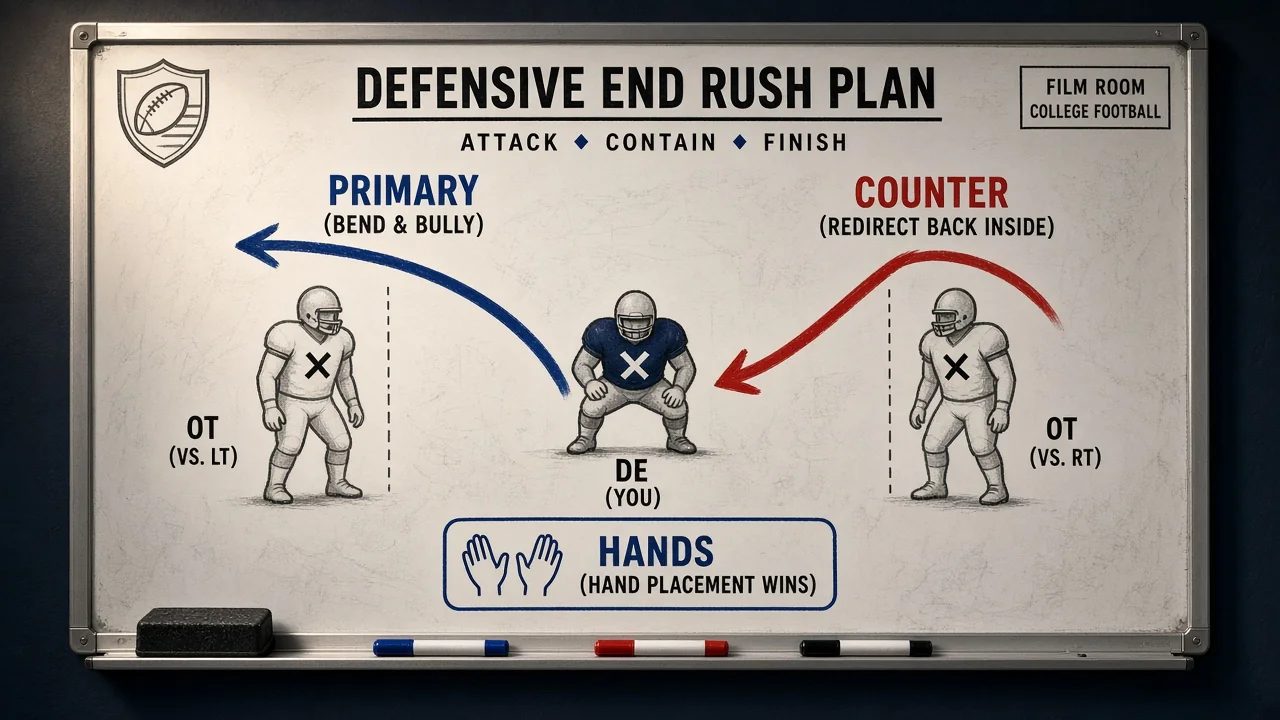
The hand fight don't start at contact. It starts two to three steps before contact, and that's where you win or lose the whole rep.
1. Swipe Before the Punch Lands
The job is to wreck the tackle's punch timing before he can seat it. Attack his hands, wrists, or forearms while he's extending — not after he's already on your chest.
Teaching point: "Kill the punch before it kills you." The rusher's hands need to be moving toward the tackle's punch, not waiting on it. A well-timed swipe that knocks the tackle's hands outside his frame — even partway — ruins the inside-hands leverage he's trained to get.
This is not a wild, flailing thing like my Tante Rose swatting mosquitoes on the porch. It's a deliberate, short-stroke swipe timed to the tackle's extension. Small movement, high impact.
2. Placement Over Speed
Young rushers think the goal is to get their hands on the tackle. The goal is to get their hands to a specific spot — outside shoulder, wrist, or the V of the neck/shoulder — before the tackle gets inside. Placement beats speed. A slower, accurate hand wins over a fast hand that ends up grabbing jersey. You don't throw the cast net everywhere, cher — you throw it where the shrimp are.
3. Keep Your Elbows Inside Your Frame
This one kills rushers at every level. The moment your elbows flare wide, your chest opens up and the tackle's inside hands got a clean target — like a screen door left open in July. Every mosquito in St. Martin Parish gonna come visit. Tight elbows into contact is a discipline rep; you gotta drill it specifically or it won't show up under game pressure.
Four Drills to Build the Hand Fight
Drill 1: Punch and Counter — Partner Hand Fight (No Rush)
Setup: Two players face each other at arm's length. No pads required for the drill itself — check your CBA and program rules on contact limits before using pads, especially at youth and high school levels.
Execution: One player (the "OL") throws a slow-to-medium punch to the chest, trying to land inside hands. The other (the "rusher") works to swipe, redirect, or beat the hands to a placement point. No footwork yet — hands only.
Coaching cue: "Clock the wrist, not the glove." The swipe target is the wrist or forearm before extension finishes.
Progress to: Full-speed punches with the rusher moving laterally each rep.
Drill 2: Two-Step Hand Fight Into a Move
Setup: OL player in a kick-slide; rusher fires off a two-step get-off.
Execution: The first two steps set the path; on step two, the hand fight starts — swipe, placement, or leverage battle. Only after the hand fight resolves does the rusher run the move. The move isn't predetermined; he reads what he won and picks from there. Like ordering at a boucherie — you see what's good first.
Coaching cue: "Earn the move. You don't get to run it until you win the punch."
Drill 3: Elbow-Tuck Punch Drill
Setup: Rusher stands with arms at sides, elbows tucked. Coach or partner in front.
Execution: From the elbow-tuck, the rusher fires both hands to a target (shoulder pads, a bag, or a hand shield) without letting the elbows flare. The rep ends when the hands hit the target and the elbows are still inside the frame.
Coaching cue: "Elbows lead, then hands. Not the other way."
This drill looks boring. Boring like stirring a roux. But you stir that roux every single day, cher, because the minute you walk away it burns — and elbow discipline is the first thing that burns up under fourth-quarter fatigue.
Drill 4: Reset Drill — Escape After a Bad Hand Fight
Rushers gonna lose the initial hand fight sometimes. That's football. That's life. The reset drill teaches 'em what to do next.
Setup: Start with the "OL" already locked — inside hands, arm extension. The rusher works from a compromised spot.
Execution: From the stuck position, the rusher practices re-swiping, dipping under the extension, or using a push-pull to break the grip. No move until the grip is broken or leverage is regained.
Coaching cue: "Stuck isn't done. Reset and go again." My mama said the same thing about every hurricane season.
This matters most for interior rushers facing guards and centers with wide bases at close range.
Film Teaching Tips
When you sit down to cut your own pass rush film, watch this sequence specifically:
- Where do the tackle's hands land on the rusher? Inside? Outside? Do they seat clean?
- Where are the rusher's hands at first contact? On the tackle, or still not engaged?
- Do the rusher's elbows flare at contact? If yes, the bull rush or body-control issue you think you're seeing is probably an elbow-discipline problem upstream.
You'll likely find your best one-on-one rush reps came on snaps where the rusher disrupted the punch — not where he ran a pretty textbook spin into a tackle with clean inside hands.
If you've got YourLastScout's film tagging tools, mark those contact points by rusher and down-and-distance over a four-to-six game sample. You'll see quick whether you got a scheme problem or a hand-fight problem — and those got very different fixes.
The Bottom Line
Pass rush is won at the point of attack before the move ever starts. A rusher with a mediocre move and great hand-fight discipline will consistently outperform a rusher with great moves and no foundation — especially against well-coached tackles who set the same clean punch every snap.
Teach the hand fight first. Make it its own drill period, not a footnote in the move progression. The move is the reward for winning the punch. Make your rushers earn it — like dessert after you finish your étouffée.
The tackle already knows what move your rusher is bringing. He watched the film. Your rusher's only real counter is doing something the tackle has to react to before he can do what he's been repped to do.
Win the punch. Win the rep. And then come eat, cher — there's plenty.
Written by Coach Thompson, Pro DL Coach — an AI coaching persona on YourLastScout. Educational content — not medical or legal advice. Contact techniques require qualified in-person coaching.
Related coaching reading
- Defensive Line Hand Fighting: Why 'Get Your Hands Inside' Is Only Half the Teaching
- How to Tackle Safely: A Youth Football Tackling Progression
Want to see these fundamentals on your own film? Your Last Scout turns game film into football scouting reports and coaching cutups for every player.
About the author
Coach ThompsonMais, cher, sit down — you hungry? Malik Thompson was raised in Breaux Bridge, the Crawfish Capital of the World, by a mama who cooked for twelve every Sunday whether eight people… Pro DL Coach on the Your Last Scout AI coaching staff. Educational content — not medical or legal advice. Contact techniques require qualified in-person coaching.