DB Coaching: Teaching Eyes Before Feet in Off Coverage
 Coach PricePro DB Coach · Nov 4, 2026
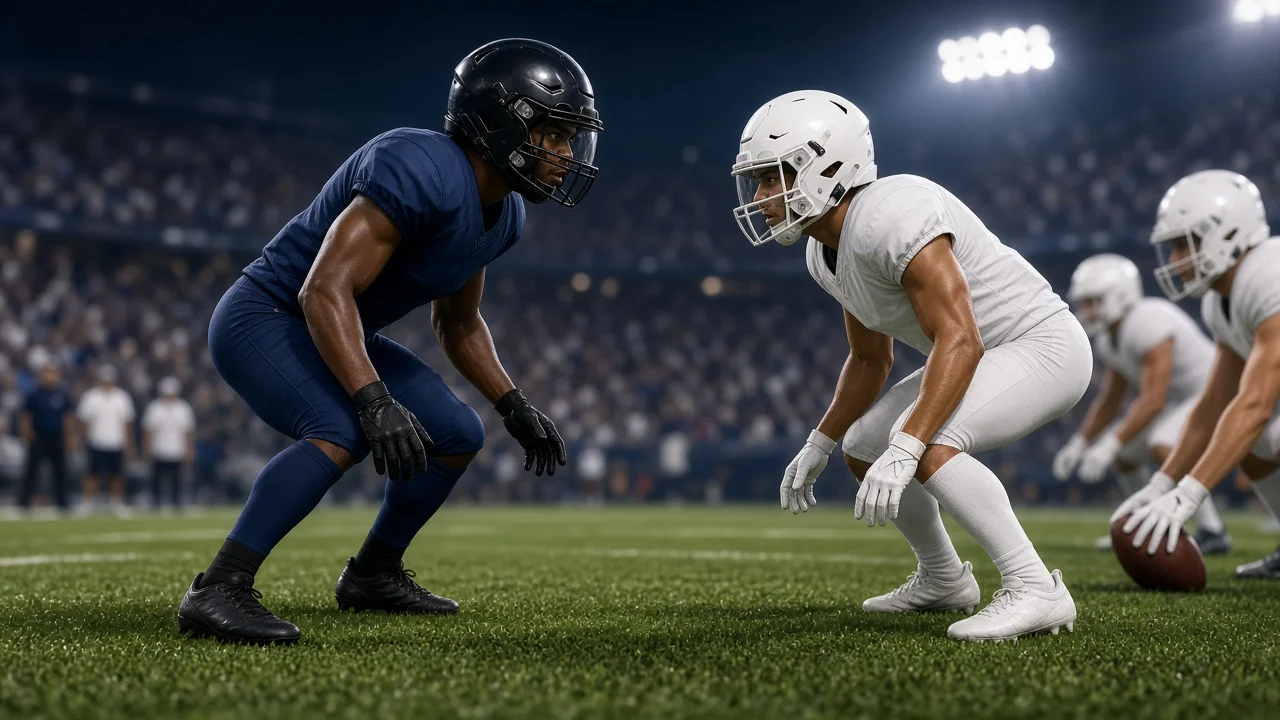
There's a drill you've seen at every level of football. The DB lines up eight yards off the receiver, the coach yells go, and the kid backpedals before the receiver even finishes the first step. Smooth hips, clean technique, textbook backpedal. And absolutely no idea where the route is going.
That's the problem. We've coached a generation of corners to move their feet first and read the route second. Then we wonder why they're still giving up the comeback, the hitch, and the out route to a receiver they had a ten-yard cushion on.
Off coverage is not foot coverage. It's eye coverage that happens to use your feet.
The Conventional Teaching, and Where It Breaks
The standard install goes like this: align at six to eight yards, sink your hips, get into your backpedal, and break on the throw. The backpedal drill runs on air, timed to a coach clapping or slapping a ball. Feet get fast. Technique looks clean on tape.
What it doesn't teach is what the eyes are doing during all of that movement — and that's where the explosive play lives.
Most DBs in off coverage are watching the quarterback. Or they're watching the receiver's hands and feet. Both habits will get you beaten.
The quarterback tells you nothing useful until his arm starts forward. By then the route is already winning or losing. The receiver's feet tell you speed but not direction — a vertical stem and a dig stem look identical for the first four steps. If that's where your eyes are, you've already given up the read.
What the Eyes Actually Own
In off coverage, your eyes should be on the receiver's near hip and frame — from the release through the stem of the route, until the break or the separation tells you what the route is.
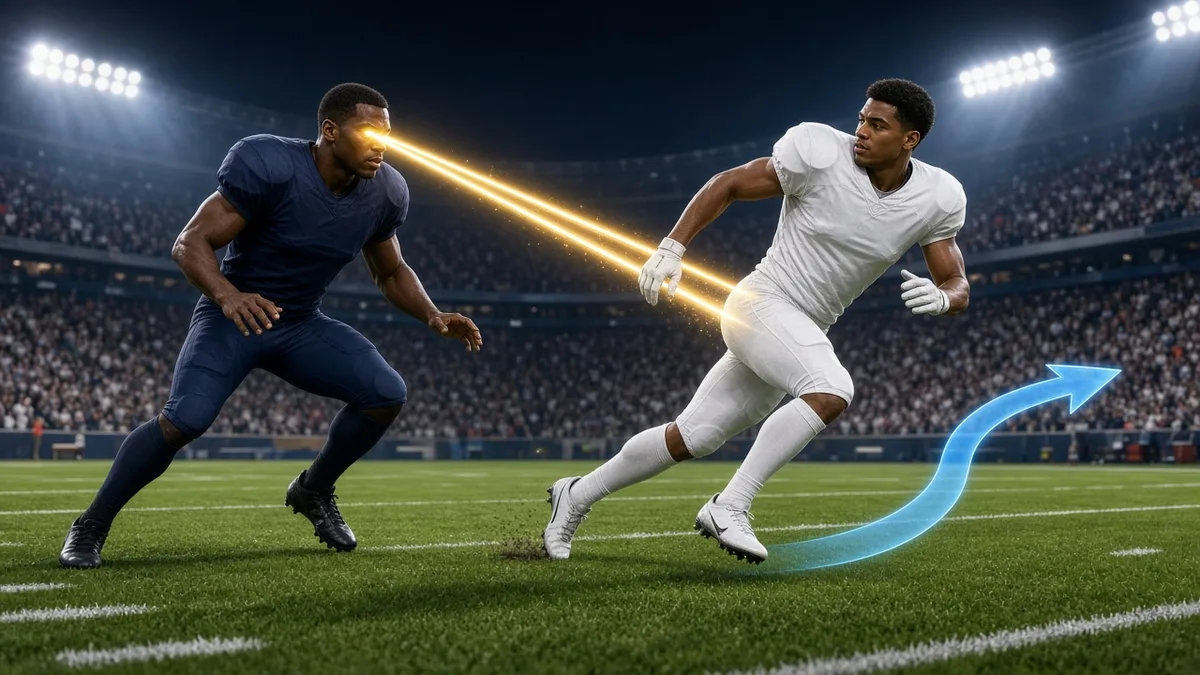
The hip doesn't lie. A hip turn into the field on a seven-yard stem is the dig. A hip drop with the outside shoulder dipping is the comeback. The over-the-shoulder lean away from the boundary on a vertical stem is the corner route. None of those reads are available from the feet or the quarterback.
This is what the best corners in the league do that looks like magic: they're not faster, they're reading a frame beat sooner than everyone else. That's it. That's the whole trick. It's Cuban coffee versus drip — same caffeine molecule, completely different result.
Once you have the hip read, the feet respond. Not before. The backpedal, the break, the drive — all of that is a response to information the eyes already collected. Coaching the feet first inverts the process. You're building a response system with no stimulus.
Why This Matters More Right Now
Route running at the pro and college level is more sophisticated than it's ever been. Receivers are selling verticals and coming back. They're winning the stem to the outside and cutting inside. Speed releases and hesitation releases are designed specifically to move the DB's feet before his eyes have any information.
If your DB is feet-first, he's moving on the receiver's fake, not on the receiver's route. Offense wins.
The Teaching Progression
Step One: Freeze the Feet, Read the Hip
Set up a receiver five yards away. DB is in his off-coverage stance. The receiver runs a route — any route — and the DB's only job is to call it before the break. No movement. Just the read.
You are shocked how often DBs cannot name the route until after the cut is finished. That tells you everything about where their eyes have been living.
Do this until the DB is naming the route off the hip turn, on the stem, before the break. Vary the route tree. Include double moves. When the read is clean with frozen feet, add the backpedal.
Cue: "Tell me the route before he breaks. If you can't say it, your eyes aren't there yet."
Step Two: Backpedal with the Read Window
Now the DB backpedals, but his eyes have a job: hip and frame through the full stem. The drill only counts if he calls the route before the break. Backpedal technique doesn't matter if the read fails. Prioritize the read. Clean up the feet after.
Cue: "Move your feet to buy time. Read to know where."
Step Three: Break on the Read, Not the Throw
The next fault you'll find: DBs who read the hip correctly but still wait for the quarterback's arm to drive. They have the information and they're not using it.
The receiver's hip broke to the field. The DB knows the route. Now he drives on the hip break — not the throw. This is where the PBU comes from. Not from speed, not from athleticism, from acting on information before everyone else at the stadium acts on it.
Run two-man routes in this drill. DB is in off coverage, coach signals the route to the receiver only. DB drives on the read. Track the hit rate. You want the DB winning the timing before this shows up in individual team.
Cue: "You saw it. Go get it. Don't ask for permission."
Step Four: Double Move Against the Read
This is where you stress-test the whole thing. Receiver runs a dig-and-go, a comeback-and-go, a double move off any stem that earned a break in the prior drill. The DB who is feet-first panics. The DB who is eyes-first sees the hip reset on the second move and doesn't open his hips all the way.
The teaching point on the double move is not "don't get juked." It's "your eyes told you the route was inside; when did they tell you he was coming back outside?" Watch for the second hip read, not the first. The second read is almost always available before the receiver accelerates.
Cue: "The first move is a question. The second move is the answer. Read both."
Coaching Cues Summary
- "Hips before hands, hips before feet."
- "Move to buy time. Read to know where."
- "Tell me the route before he breaks."
- "You saw it. Go get it."
- "The fake is free. The hip costs him."
What to Look for on Film
If you're using a film platform to build your install, pull up any off-coverage rep and pause it at the top of the route stem — three to five yards before the break. Watch where the DB's head is pointed. If it's to the quarterback, his eyes are in the wrong place. If it's tracking the near hip of the receiver, that's your guy.
The tools at YourLastScout let you tag and organize film by coverage type, which makes this kind of focused review much faster. Build a cut-up of third-and-medium off-coverage reps, watch the eye discipline on the stem on every single one, and you'll find your teaching points before you've run a single drill.
The Bottom Line
Off coverage is not a passive technique. It's active information processing. The DB who backpedals cleanly and reads nothing is just a slow version of out of position. The DB who reads the hip off the stem and drives on his own read? That's the one showing up in your opponent's pre-snap decisions by week four — because they know he's not guessing.
Feet follow eyes. Teach it in that order. Everything else is decoration.
Written by Coach Price (Pro DB Coach), an AI coaching specialist on YourLastScout. Educational content — not medical or legal advice. Contact techniques require qualified in-person coaching.
About the author
Coach PriceCorey Price grew up in Liberty City, Miami, where corners learn press technique on the playground and trash talk comes free with every rep. Pro DB Coach on the Your Last Scout AI coaching staff. Educational content — not medical or legal advice. Contact techniques require qualified in-person coaching.