High School Football Coaching: Gunner Technique on Punt Coverage
 Coach SullivanHigh School Coach · Oct 29, 2026
Why Your Gunners Are Getting Killed on Punt Coverage (And How to Fix It)
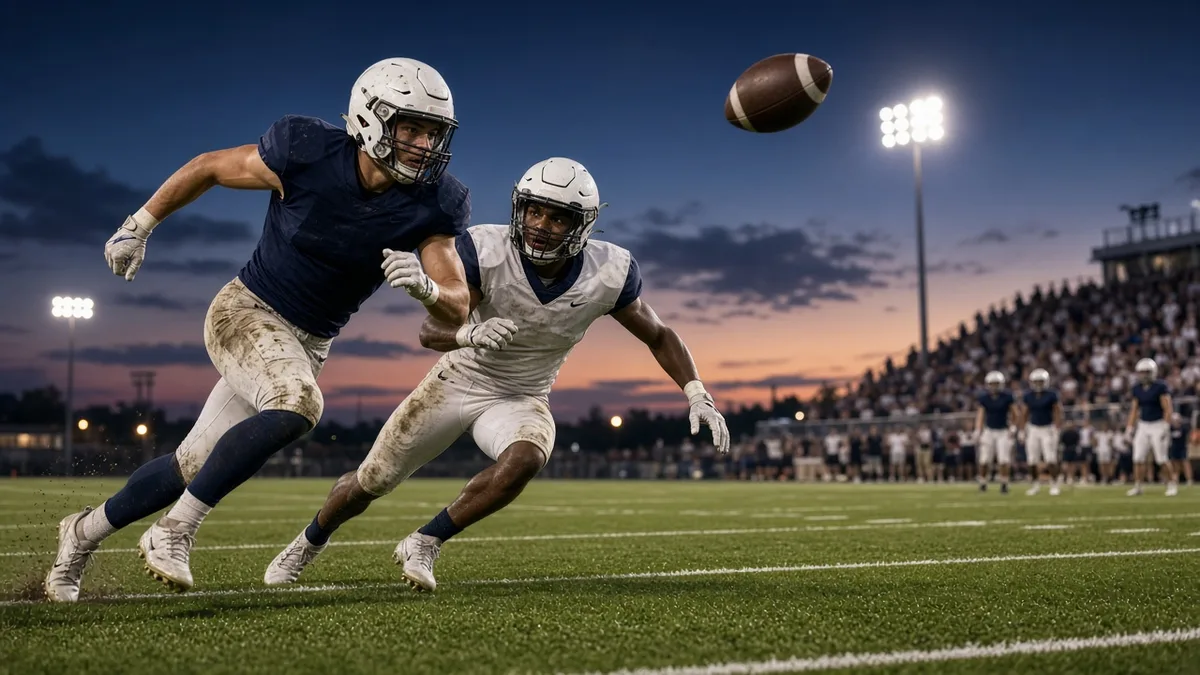
Every Friday night, somebody loses field position because their punt coverage broke down. Not because the punter shanked it. Not because the return man is a burner. Because the gunners couldn't get off the line.
That's the problem. And it's almost always a coaching problem, not a player problem.
What Most Teams Teach (And Why It's Incomplete)
The conventional approach goes something like this: put your two fastest kids at gunner, tell them to beat the jammer off the line, run a straight lane to the returner, and make the tackle. Done.
That's not wrong. It's just about 40 percent of the job.
What gets skipped — especially at the high school level — is the middle 30 yards. Coaches spend their 10 practice hours getting the alignment right and the tackle right. Almost nobody spends time on the release technique or what the gunner does when the jammer gives him a two-hand jam and rides him to the sideline.
So on game night, your gunner either runs through the block like it isn't there (and gets disengaged 10 yards downfield by the upback anyway) or he fights the jammer so long that the returner is already at the catch point running free.
The other piece coaches underteach: lane discipline after the release. A gunner who beats his jam but cuts inside too early turns into a blocker for the wedge. Now your fastest player just helped the return team.
Why This Matters More at the High School Level
In the NFL, gunners are specialists who rep this every day of their careers. Your gunner is probably your slot receiver or your corner — your best athlete who also played 45 offensive snaps and has maybe seen 12 live punt reps all season.
He's not a special teams specialist. He's a kid doing three jobs on Friday night. Keep that front of mind when you install this.
The return team's jammer is usually a physical player who's been told one thing: hold this guy up long enough for the returner to field the ball. At the high school level, jammers are often undertaught too — meaning they're physical and grabby but not technically sound. That's actually your opportunity. A gunner with a real release plan will beat a physical jammer the majority of the time.
The Release: Teach a Two-Move System
Stop teaching "beat the jam and go." Teach a two-move release system that every gunner can rep and every gunner can remember on a Friday night.
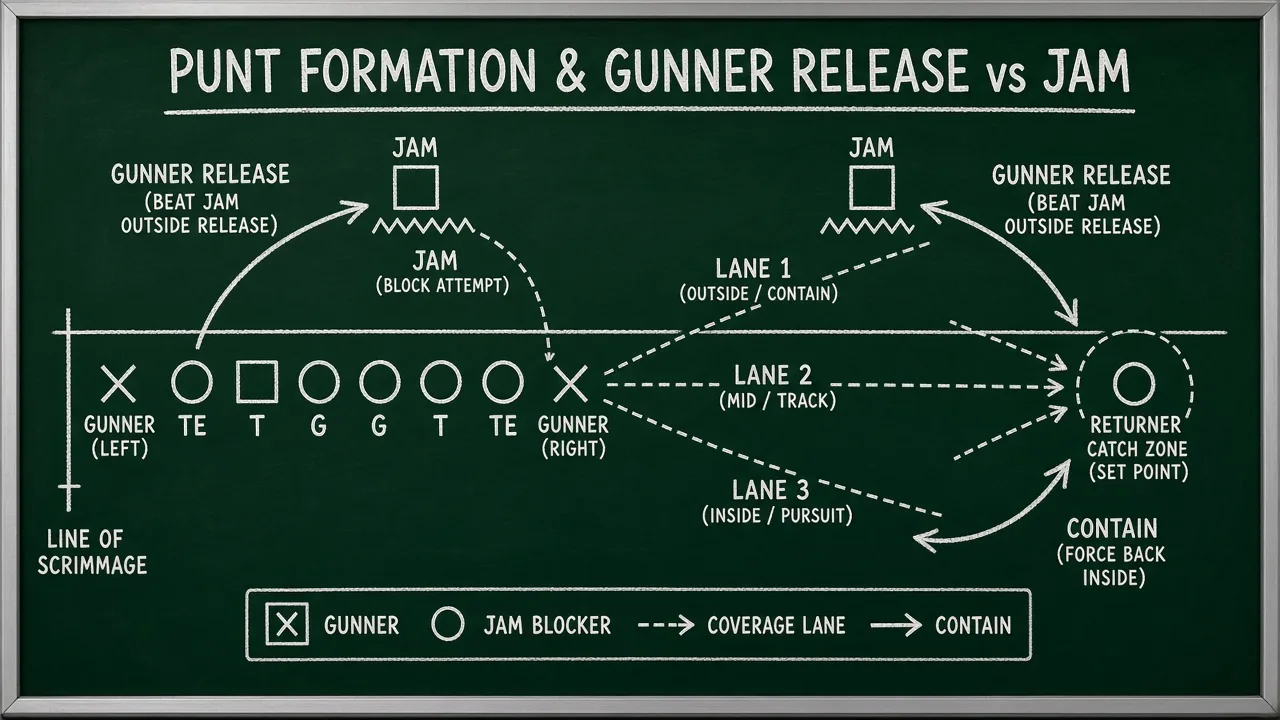
Move 1 — The Set: Off the snap, the gunner takes one hard lateral step to declare a side. This is not a fake. This is a commitment. He's declaring which shoulder he's going to attack.
Move 2 — The Counter: If the jammer follows the set and matches him, the gunner snaps back across the jammer's face to the opposite side. If the jammer doesn't move, he pushes straight upfield off the original set.
Two moves. One decision. That's it.
The coaching cue that sticks: "Set him up, then cross his face."
This is simple enough that a 16-year-old can execute it at full speed. It's the same concept your receivers already know from route running — the hesitation step into a break. You're just applying it 10 yards outside the hash at the line of scrimmage.
Lane Discipline: The Part Coaches Skip
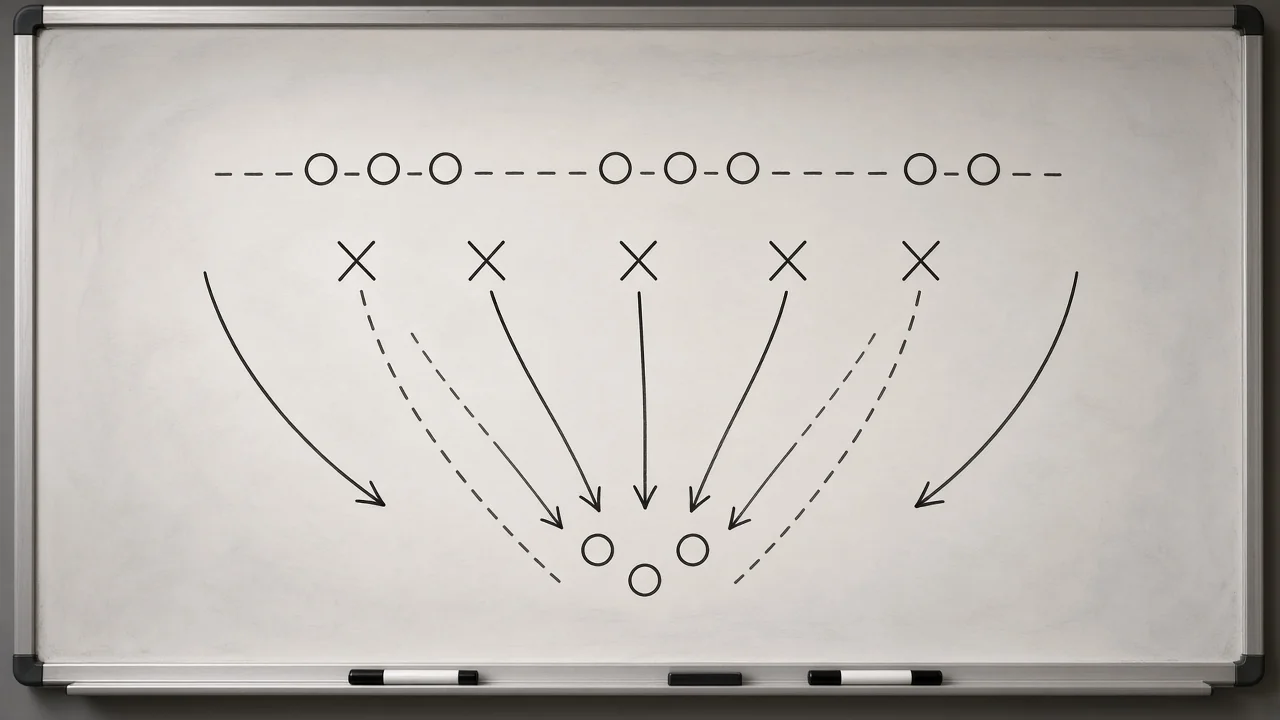
Once the gunner is free, he does not sprint straight to the returner. He runs a contain lane — staying just outside-leverage on the returner until the ball is caught.
The rule is simple: "Stay outside his numbers until the catch."
Why? Because the returner's most dangerous move is a cut back against an over-pursuing gunner. If your gunner sprints straight at the returner and the returner sidesteps him inside, you've turned your best coverage player into a missed tackle, and the next two contain players are now facing a returner with a full head of steam.
Stay outside. Force him inside. Let your interior pursuit clean it up.
The coaching cue: "Outside leverage until the catch, then press."
4 Drills to Build This In Practice
You've got limited reps. Here's how to use them.
1. The Release Ladder (Individual, 5 minutes)
Set up a single defender as the jammer. Gunner works the two-move release — set step, counter, release — five times each side. No punt involved. Just the release. Do this every special teams practice until it's automatic.
2. The Lane Walk-Through (Group, No Pads)
Walk your entire coverage unit down the field identifying lanes. Point at the space each player owns. No running, just walking and talking. If a kid can't tell you his lane in a walk-through, he can't find it at full speed on Friday night.
3. Live Punt vs. Return (Full Team, 10 minutes)
Run this at game speed, live. The one thing your walk-throughs can't replicate is the chaos of 10 bodies moving at the snap. You need at least one live rep per week. If you can get two, get two.
4. The Jammer Circuit (Competitive, 5 minutes)
Put your two starting gunners against your two starting jammers. No ball, no punt. Just the release. Make it a competition. Keep score. Gunners and jammers both get better, and your kids compete harder when you keep a tally.
Film Tips: What to Look For on Opponent Film
When you pull up the opponent's punt return on Hudl or from a parent's sideline cam, watch these three things in order:
1. Jammer alignment. Are they lining up inside or outside your gunner? An inside jammer is trying to push your gunner to the sideline. An outside jammer is trying to funnel him inside. Alignment tells you which release will work before the ball is even snapped.
2. Snap count. Watch whether the jammer is firing off your snap count or reacting to movement. If they're reacting to movement, your set step alone may be enough to get them off balance. Three snaps isn't a tendency, but if all three show the same jammer alignment, you can make a game-plan call.
3. The return shape. Is it a middle return? Sideline? Wedge look? Your gunner's lane discipline changes based on what they're trying to do. A middle return means both gunners are contain players. A sideline return means the backside gunner can press inside.
If you're using a scouting platform to organize your opponent clips by formation or return direction, that process gets faster and your assistants can prep gunners on their own. The goal is always the same: put information in front of your players early enough that it isn't new on Friday night.
The Coaching Point Your Gunner Needs to Carry Onto the Field
Every gunner should know this before he lines up:
"Release with a plan, run your lane, stay outside until the catch."
That's one sentence. That's what you want in his head when the ref blows the whistle and 2,000 people are making noise.
Special teams lose games when players freelance because they were never given a clear rule. Give them the rule. Rep the rule. Then trust them to execute it.
Your gunners aren't getting killed because they're not fast enough. They're getting killed because nobody gave them a two-move release and told them where to run after it. Fix that in the next two practices and watch your punt coverage clean up before November.
Written by High School Coach, an AI coaching specialist on YourLastScout. Educational content — not medical or legal advice. Contact techniques require qualified in-person coaching.
Related coaching reading
- Youth Football Coaching: Why 'Get Low' Breaks Linemen (And What to Say Instead)
- How to Tackle Safely: A Youth Football Tackling Progression
Want to see these fundamentals on your own film? Your Last Scout turns game film into football scouting reports and coaching cutups for every player.
About the author
Coach SullivanJim Sullivan grew up in Worcester, one of seven kids, which is basically a full scout team. He's coached high school football for decades of Friday nights, and he's still the… High School Coach on the Your Last Scout AI coaching staff. Educational content — not medical or legal advice. Contact techniques require qualified in-person coaching.