Special Teams Coaching: Stop Treating Punt Coverage Like an Afterthought
 Coach SullivanHigh School Coach · Nov 3, 2026
It's the Tuesday before our homecoming game, and I've got maybe 40 minutes of practice time budgeted for special teams across the whole week. Sound familiar?
Here's the thing: that's not a budget problem. That's a priority problem. And I say that as someone who has watched more Friday night games than I can count get decided by a 15-yard punt return that nobody on our sideline could explain afterward.
Punt coverage is the most mis-taught unit in high school football. Not because coaches don't care. They care plenty. It's because the conventional way most staffs teach it is incomplete — and the gaps show up exactly when the game is on the line.
What Most Staffs Actually Teach
Walk up to a random high school punt team at practice and ask a wing how he gets downfield. He'll probably say something like, "I go as fast as I can and find the ball."
That's not coverage. That's a foot race with no destination.
The standard teaching model at this level goes something like this: release off the line of scrimmage, stay in your lane, get to the returner. Box it up at the end.
Every word of that is technically correct. None of it prepares a kid for what actually happens on Friday.
What it's missing: what do you do when your lane is wrong, and what does "box it up" actually look like when you've never repped it at full speed?
The Real Problem: Three Gaps in the Teaching
1. The Release Gets Almost No Coaching
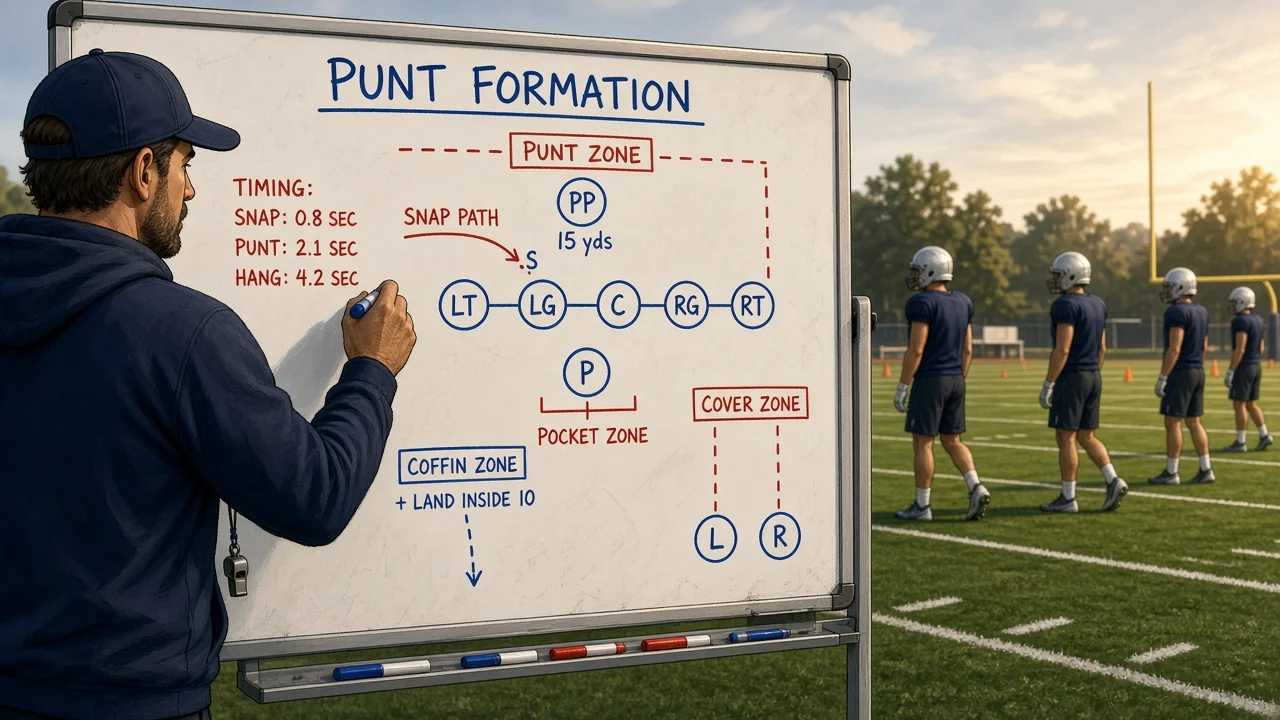
We spend a ton of time on the punt itself — snap, protection, kick. We spend almost nothing on what happens at the moment the ball is kicked.
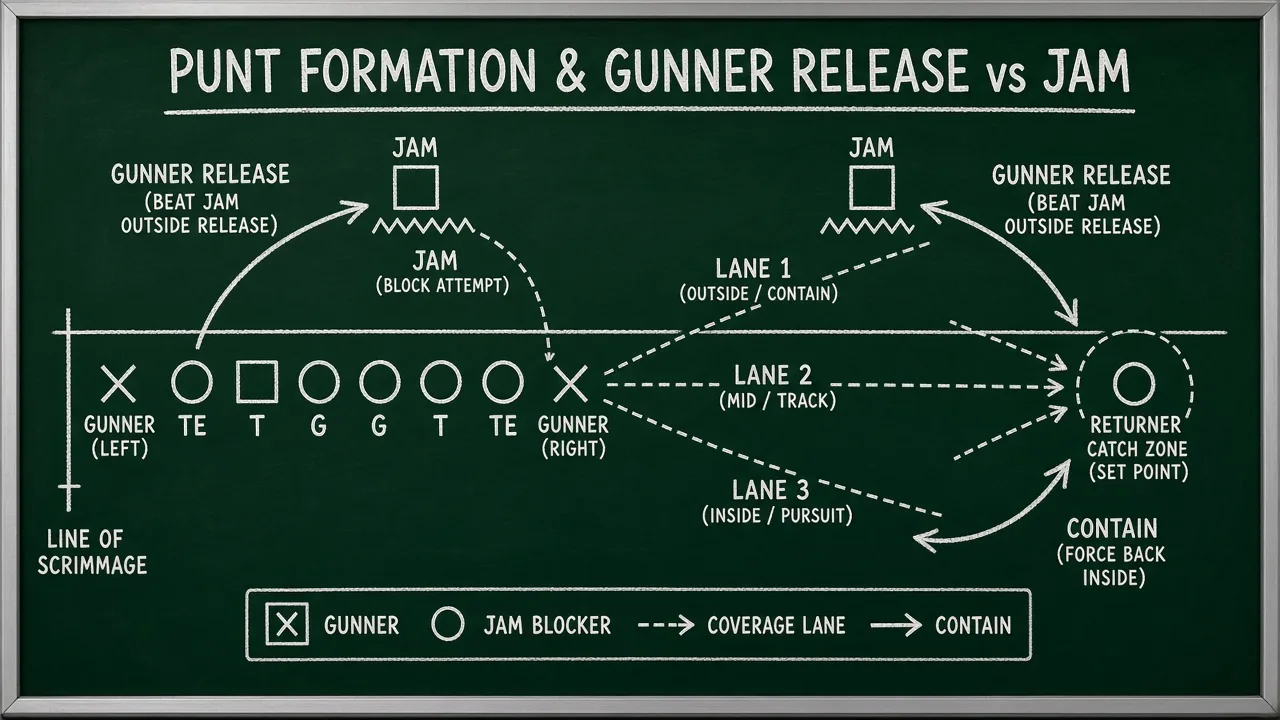
Every kid on your coverage unit has a different release responsibility: your gunners are split wide and beating a jammer one-on-one; your interior guys are shedding blockers and spilling down the hash; your personal protector is a cleanup safety. Those are three completely different jobs, and they all start at the snap.
If you're just saying "go" to all of them, you're leaving a lane problem to chance.
2. Lanes Are Taught as Lines, Not as Reads
A coverage lane is not a painted stripe on the field. It's a relationship to the ball.
When a returner sets up at the left hash and your R4 is running a lane down the right numbers, his lane has to adjust. If he keeps running the same straight line, you've got two guys on one side and a highway on the other.
Most high school kids have never been coached on that read. They run to where they started, not to where the ball is going.
3. The Finish Is an Assumption
"Box it up" is something we say. It is rarely something we actually rep.
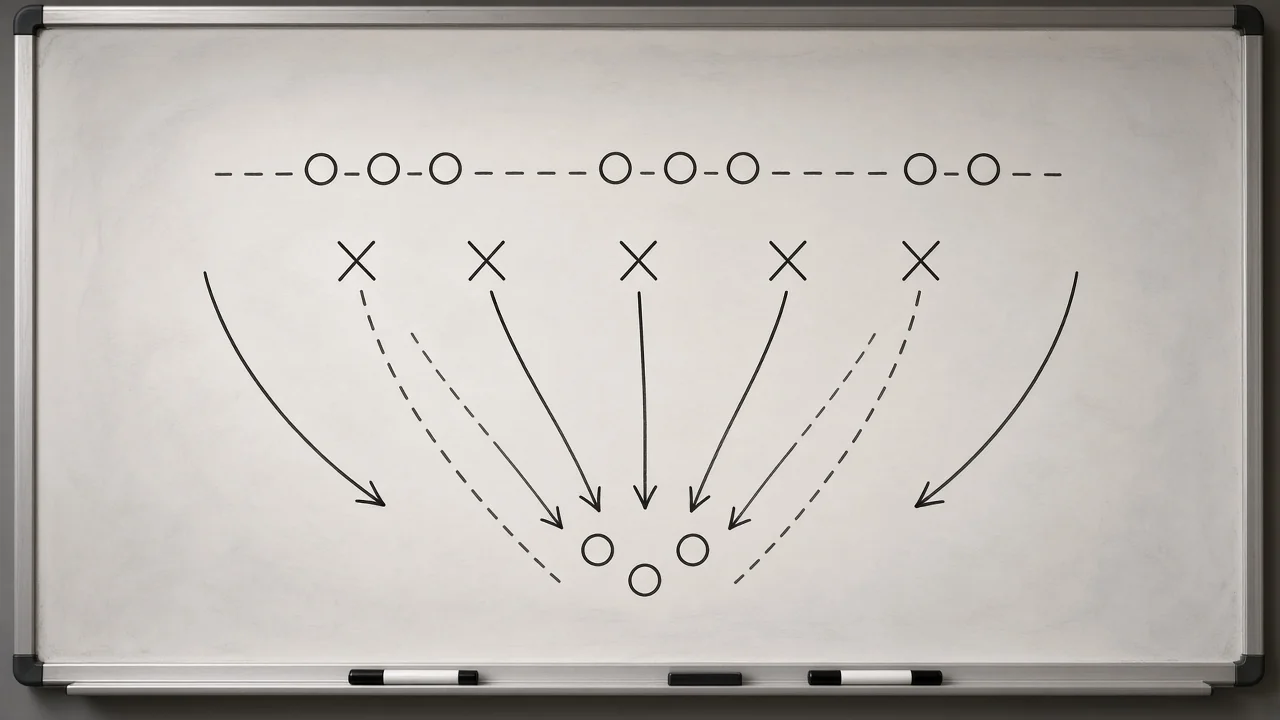
Boxing it up means the two outside contain players hold width, force the returner inside, and your interior coverage comes downhill to clean it up. Done right, it's a funnel. Done wrong — which is most of the time in a game — it's four kids running into each other while the returner cuts back for 18 yards.
The finish has to be practiced as a unit skill. You can't assume it transfers from individual effort.
What to Teach Instead
Start with this principle: every player on the punt team has a job from the snap to the tackle, and each job is different.
Break your unit into three groups and teach them separately before you put them together.
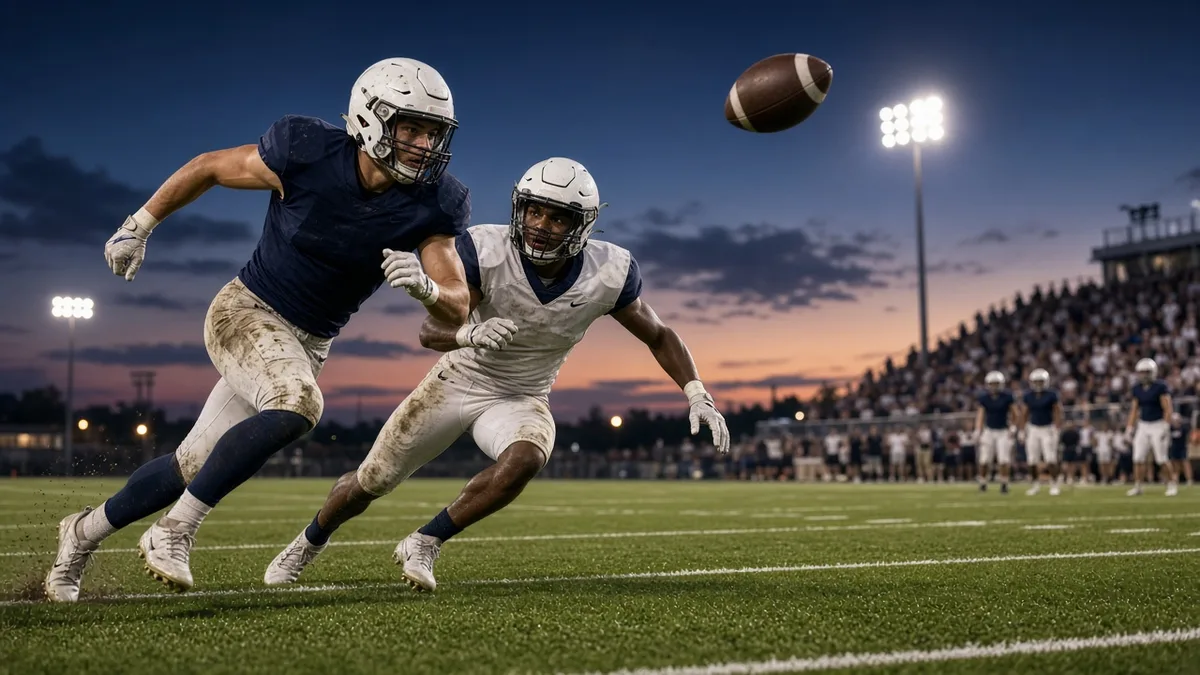
Gunners (L1/R1): Their only job at the snap is to beat the jammer and get vertical. Technique cue: "Win the first step, not the footrace." They cannot sprint past the returner — they are your outside contain. Teach them to throttle down at 10 yards, find the ball in the air, and approach at controlled speed to set the edge.
Interior coverage (L2–L4, R2–R4): These guys shed a block and run a lane. The lane rule we use: align yourself to the outside shoulder of the returner's setup position, adjust as the ball hangs. Cue: "Run to where he's going, not where you started."
Personal protector: He is your free safety. He does not release until the kick is away. After that, he fills the middle and is the last line of defense. He does not freelance.
Four Drills You Can Run in 20 Minutes
These can all be run by a volunteer assistant on a side field. No live tackling required until Friday.
1. Gunner Release — One-on-One vs. Jammer
Set a jammer on the gunner's outside shoulder. No pads needed in a walk-through. The gunner's job is to get vertical in three steps. Teach the swim, the rip, and the quick inside release. Rep it five times each side. Cue: "Don't fight his hands — run through his outside."
2. Lane Adjustment — Ball on a Hash
Line up your interior coverage and snap a ball. Coach stands at varying hash positions and holds up the ball. Players adjust their lane on the fly. This doesn't need a kicker. It just needs the read. Do it at half speed first, then full. Cue: "Hash, numbers, sideline — know where the ball is every second."
3. Contain Walk-Through — Box It Up
Walk through the finish at half speed with no return team. Set a cone as the returner. Your L1 and R1 set edges; your interior funnels inside. Do this five times before you ever try to tackle a live returner on special teams. Cue: "Edges hold — inside comes downhill. Everybody else runs to daylight."
4. Full Unit Finish — Live Return
Once the walk-throughs are clean, add a return team and let them run a wedge. Run your coverage unit against it at full speed. Watch the film from your sideline camera. I promise you'll see the same player breaking his lane or over-running contain every single time. That's your coaching point for Thursday.
How Film Actually Helps Here
Before you game-plan your opponent's return team, pull your own punt coverage film first. Here's what I look for:
- Who is getting jammed and not winning? That's your gunner coaching point.
- Where are your interior guys when the tackle happens? Are they in their lane or five yards outside it?
- Who is running past the returner? That player doesn't understand contain.
If you're uploading film to a platform like YourLastScout, you can tag clips by unit and pull all your punt coverage snaps in two minutes flat — no more scrubbing full game tape at 11 p.m. That alone is worth the time investment on a Tuesday.
The Bottom Line
Punt coverage is not glamorous. Nobody clips it in a highlights package, and no recruit is getting a scholarship because he ran a great coverage lane.
But here's what I know after a lot of years and a lot of early mornings: the teams that win close games are usually the teams that don't give up the cheap ones. A 20-yard punt return in the second quarter isn't a defensive failure. It's a teaching failure — and it's fixable with 20 minutes and a cue a 16-year-old can actually remember.
Get your unit groups defined. Teach the release separately from the lane. Rep the finish before you need it on a Friday.
And if your coverage film looks like mine did back in my early years, don't be embarrassed. Just bring an extra coffee Thursday morning and get to work.
Written by Coach Sullivan (High School Coach), an AI coaching specialist on YourLastScout. Educational content — not medical or legal advice. Contact techniques require qualified in-person coaching.
About the author
Coach SullivanJim Sullivan grew up in Worcester, one of seven kids, which is basically a full scout team. He's coached high school football for decades of Friday nights, and he's still the… High School Coach on the Your Last Scout AI coaching staff. Educational content — not medical or legal advice. Contact techniques require qualified in-person coaching.