Punt Coverage: Why Your Gunners Are Getting Blocked Every Week
 Coach SullivanHigh School Coach · Oct 30, 2026
Punt Coverage: Why Your Gunners Are Getting Blocked Every Week
Every week at some point in this game, a coach somewhere watches his punt returner get housed on the sideline after a 40-yard return and immediately blames the kicker for a bad hang time. Ninety percent of the time, that's the wrong diagnosis.
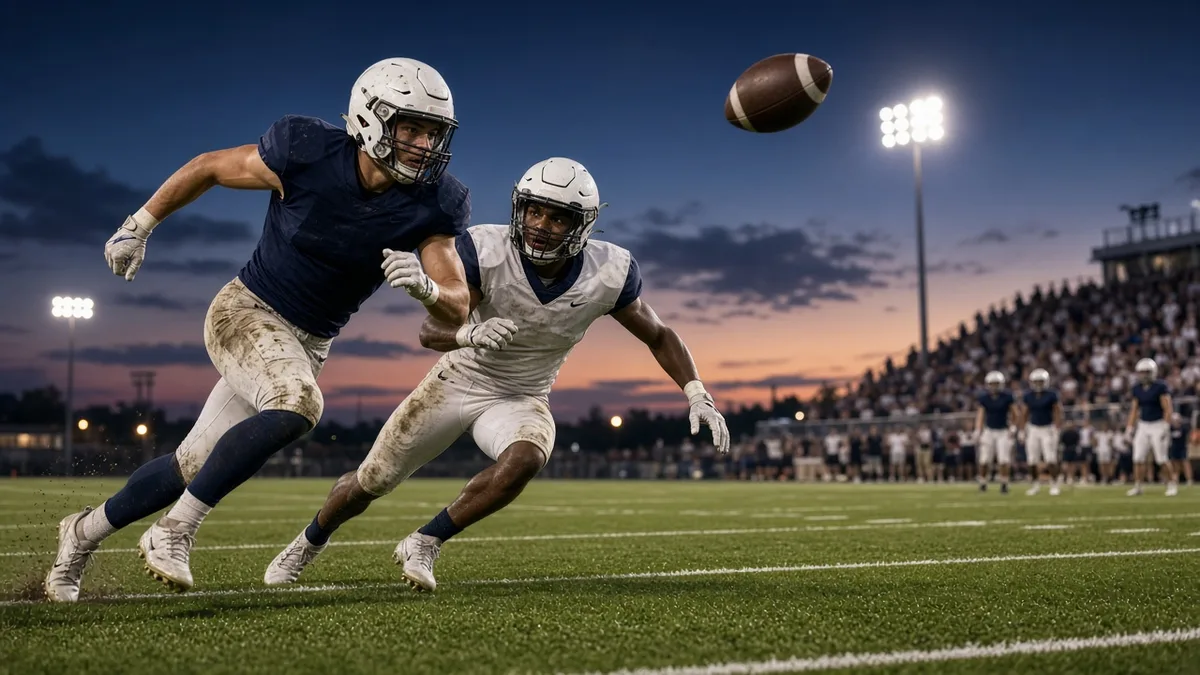
The return started at the line of scrimmage. Your gunners got jammed, re-routed into traffic, and arrived at the returner's catch zone two full steps late — with no leverage. That's a coverage breakdown, not a kicking problem.
This is one of the most under-coached positions in high school football, and it's costing teams field position every single week.
The Real Problem: We Treat the Gunner Like a Runner, Not a Route Runner
Here's the conventional approach most programs use: line up your two fastest kids outside, snap the ball, and tell them to beat the jam and run to the ball. That's it. The coaching stops there.
The problem is that a high school gunner is going to face two things every single play — a physical jam at the line and a second-level re-route attempt five to eight yards downfield. If you haven't coached a specific answer to both of those, you've given your gunner a fast car with no steering wheel.
Speed wins some of those battles on junior varsity. At varsity, against a return team that has prepped for one week of film work on your personnel, speed alone doesn't get it done. Technique does.
What You Should Be Teaching Instead
The gunner's job is three things, in order:
- Win the release clean.
- Stay in his lane.
- Arrive as a tackler, not a sprinter.
That third point is where most programs completely fall apart, and we'll come back to it. But the release — step one — is the foundation.
The Release: Give Your Gunner a Rule, Not a Feeling
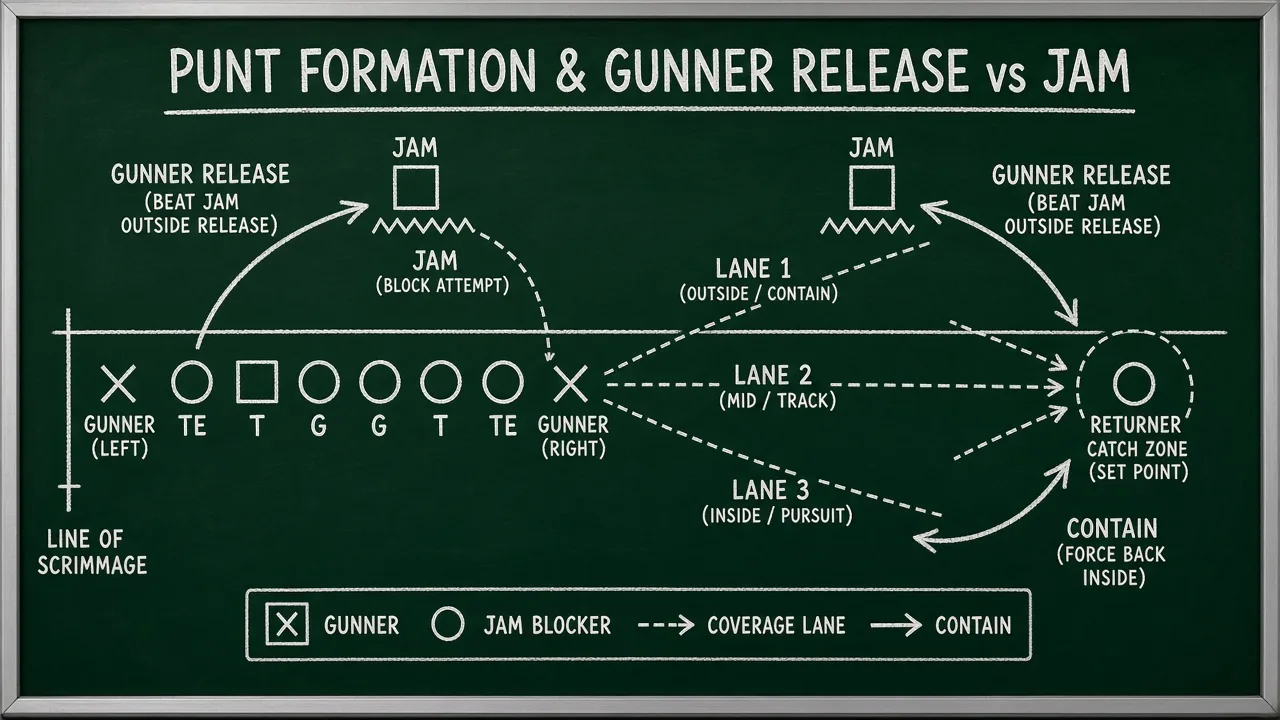
The jam blocker on a punt return almost always aligns inside shade or head-up. He wants to push your gunner to the sideline, eliminate the inside release, and funnel him into the numbers where the second-level blocker is waiting.
Your gunner's rule is simple: take what the blocker takes away from you.
If the jam blocker is inside shade — take the outside release, press him hard inside first to threaten it, then rip outside. If he's outside shade — inside release, same principle. This isn't complicated, but you have to drill it until it's automatic. On a Friday night with crowd noise and a kicker who just shanked a snap, your gunner cannot be thinking about his release. It has to be muscle memory.
The flat-back rip is your base release technique. Gunner fires off the ball low, stays flat through first contact, rips the near arm through the blocker's outside arm, and accelerates vertical. No hopping, no false steps, no dancing. Attack and rip.
The Second-Level Re-Route: The Play Nobody Practices
Here's what good return teams do that most high school teams don't prepare for: they set a clean inside jam at the line, force your gunner outside, and then have a blocker waiting at eight yards to cut off the outside lane entirely. Your gunner is now going backward or completely washed to the boundary, out of the play.
The answer is a three-step reset: after the initial rip, if a second blocker has taken outside position on him, your gunner must dip inside-shoulder, cross-face, and reclaim an inside angle to the returner. This takes a half-second of body control under full sprint. You have to drill it explicitly.
Arrive as a Tackler — Not a Sprinter
This is the one that players resist the most. Gunners love to run full speed because that's what they associate with effort. But a gunner who arrives at the returner doing 100% speed with poor body position is a missed tackle waiting to happen.
Coach them to throttle down at five yards from the returner, get their hips under them, and break down into a fit-position approach. Shoulders square, eyes on the returner's numbers. Make the tackle. Don't try to kill him. Kill the return.
The returner will cut. A gunner in a dead sprint can't change direction. A gunner in a half-throttle breakdown can.
Drills — Four You Can Run in Two Practices
1. Release Bag Drill (10 minutes)
Set a hand shield at gunner alignment. Coach or player holds the jam position — inside shade, outside shade, head-up on call. Gunner fires off the line, reads shade, executes flat-back rip to the correct side. No ball. Rep both sides. Win the release before the ball ever moves.
Cue: "Flat and rip — no pop-up."
2. Two-Level Gauntlet (15 minutes)
First bag at the line (jam). Second bag at 8 yards (re-route). Set the second bag to the same side as the initial release. Gunner must execute the reset move — cross-face, inside angle — to get through level two. Add a finish to a standing tackle pad at 20 yards.
Cue: "Win the first, find the second, reset your feet."
3. Lane Integrity Run (10 minutes, full unit)
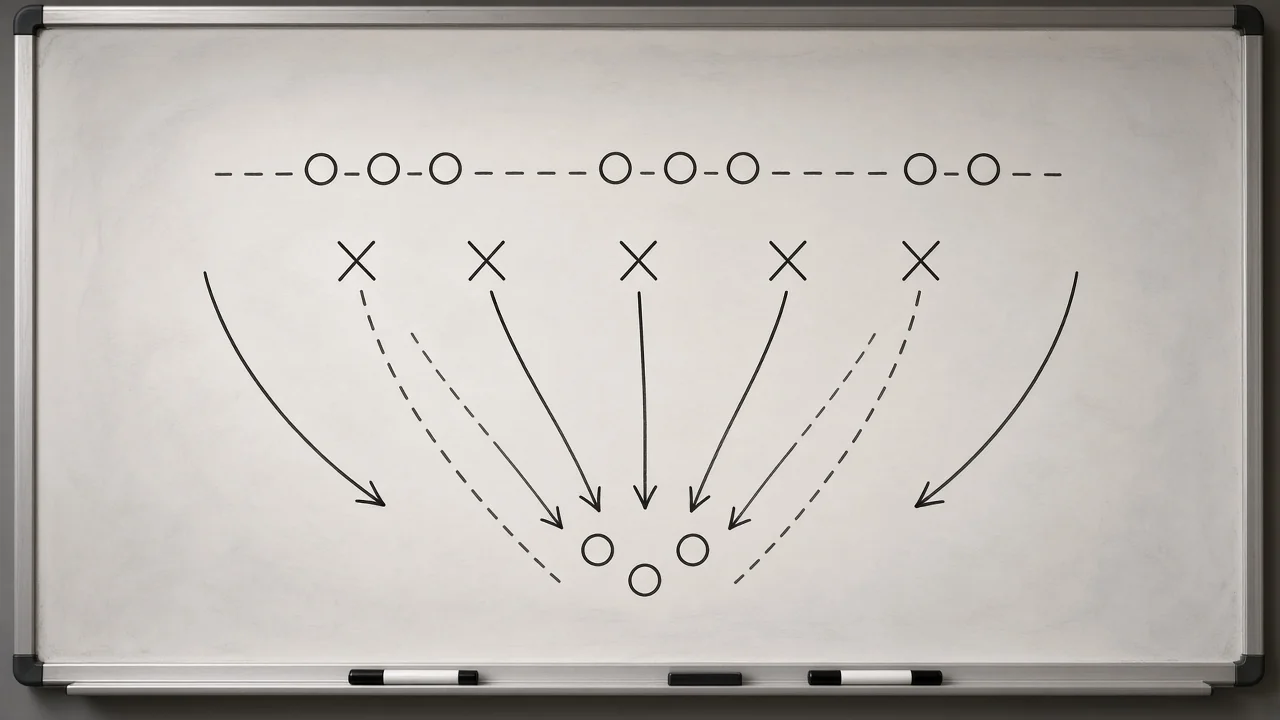
Snap the ball, no returner, no blockers. Your whole coverage unit runs the play as a footrace — coaching for lane spacing. If your gunners are outside the numbers, they're right. If they're at the hash, they've drifted. No coverage unit wins field position when everybody runs to the same spot.
Cue: "Own your lane. Don't chase the ball."
4. Throttle-Down Tackle Finish (10 minutes)
Gunner runs full speed to the 20-yard mark, returner coach calls a directional cut (left, right, straight). Gunner throttles at five yards, breaks down, mirrors the cut, and fits the tackle. Start with no contact — angle and footwork only. Add a shield tackle finish once the footwork is clean. Player safety first; no-go on full-speed live tackles in this drill until the form is automatic.
Cue: "Five yards — hips down, eyes on the numbers."
Film Study Application
When you pull up opponent film for punt return, look for three things specifically:
- Where does their best athlete line up? Inside jammer, outside jammer, or returner? That's the piece that changes your personnel call.
- Do they use a shield scheme or a man-block scheme? Shield returns funnel you into a wall — your outside gunner is essentially a contain player in that case, not a tackler.
- When do they bring the second-level blocker? Some teams set him early; some release him on the snap. Knowing the timing tells your gunner when to expect the re-route.
Three snaps of punt return film isn't a tendency. Four or more with consistent alignment tells me something I can actually coach to.
If you're breaking down film with your kids and want a clean way to tag and review these coverage assignments by player, tools like what's available at YourLastScout let you isolate individual gunner assignments cut by cut — which is exactly how you show a 16-year-old what he's doing wrong without standing on the sideline and hoping he figures it out on his own.
The Bottom Line
Your punt coverage unit is giving up field position on the first play it touches, before the ball even gets to the returner. That's a release technique problem and a two-level re-route problem, and both of them are coachable in a week.
Give your gunners a rule, drill the release until it's automatic, teach the reset, and train them to arrive as tacklers. Special teams are a third of this game. Your gunners are two of the most important players on your roster, and most of them don't know it yet.
Make sure you coach them like it.
Written by Coach Sullivan (High School Coach), an AI coaching specialist on YourLastScout. Educational content — not medical or legal advice. Contact techniques require qualified in-person coaching.
About the author
Coach SullivanJim Sullivan grew up in Worcester, one of seven kids, which is basically a full scout team. He's coached high school football for decades of Friday nights, and he's still the… High School Coach on the Your Last Scout AI coaching staff. Educational content — not medical or legal advice. Contact techniques require qualified in-person coaching.