Why Your Offense Stalls on Second Down — An Offensive Coordinator's Fix
 Coach CastellanoPro OC · Oct 29, 2026
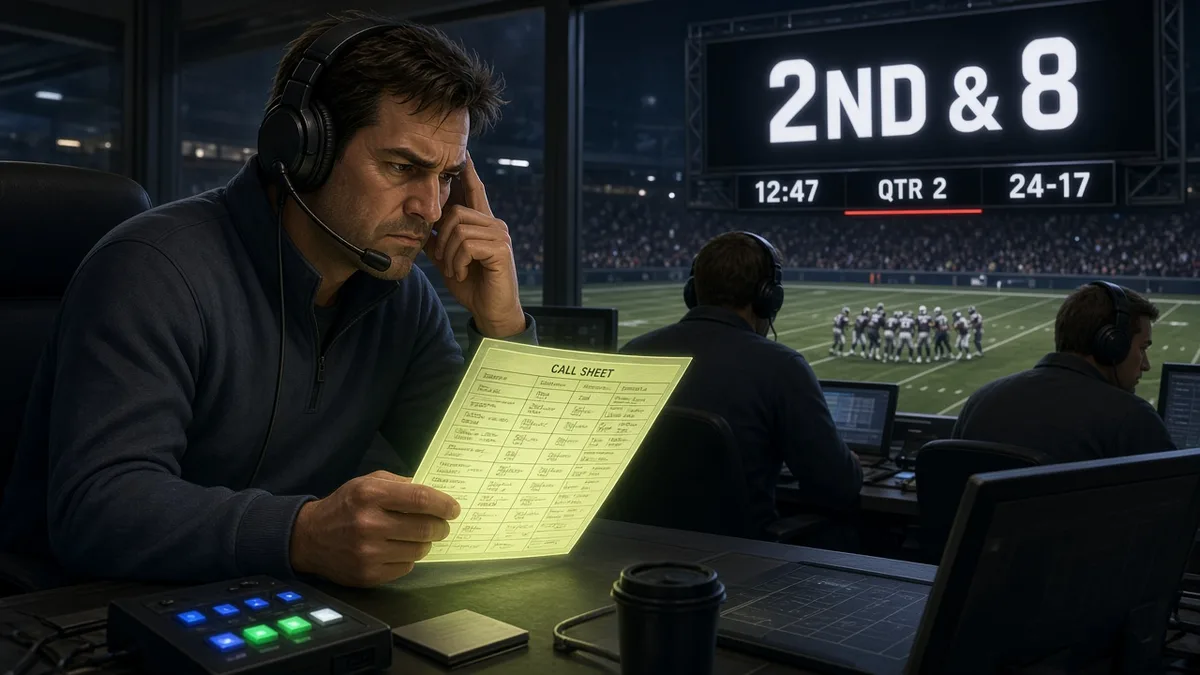
Second down is the most mismanaged down in football. Not fourth down. Not third-and-long. Second down.
At every level — youth, high school, college, pro — offensive staffs spend the most preparation time on third down. Third-down packages, third-down personnel groupings, third-down route combinations. It's on the depth chart. It's on the call sheet. And yet, in most offenses, third down is simply the consequence of what happened on second down. Win second down and third down barely exists. Lose second down repeatedly and you're in third-and-7 or longer, and at that point you're playing defense's game, not yours.
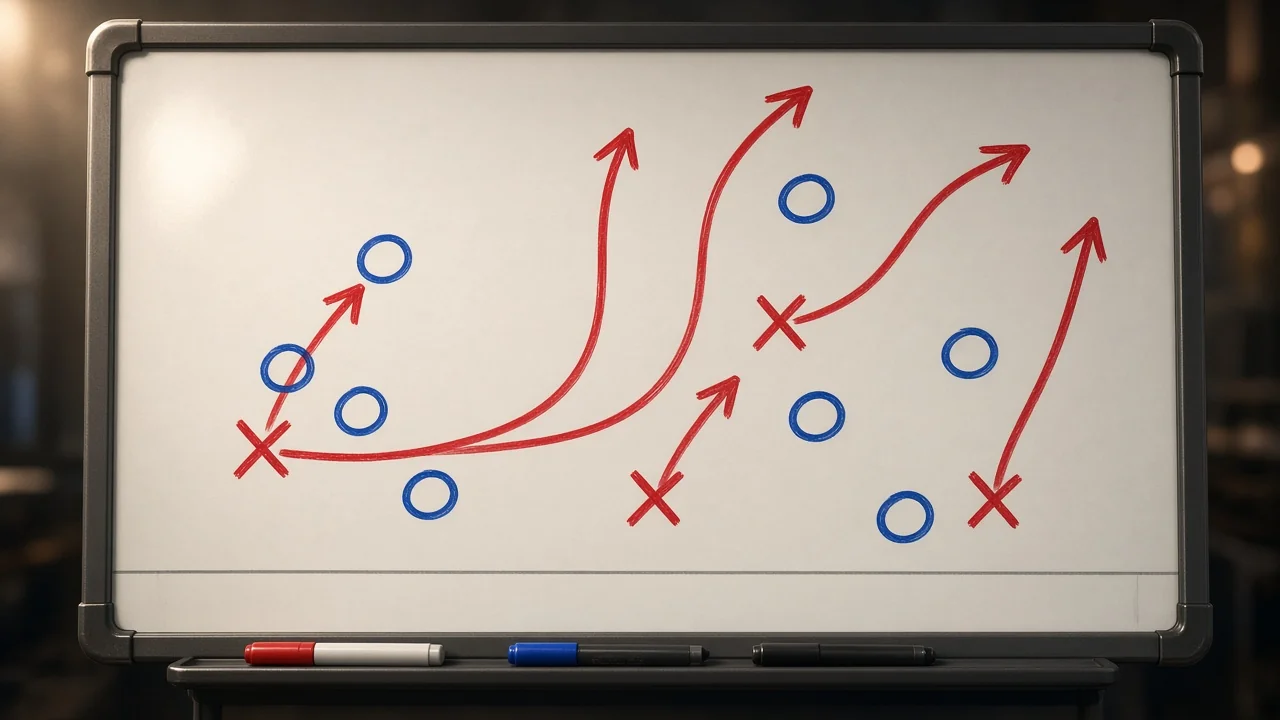
Here's the problem that shows up on film constantly: teams treat second down as a neutral down, a placeholder between first down and the "real" decision on third. They run their most predictable calls — inside zone, the same flat-curl combination they've run all season — without any plan for down-and-distance management. The result is a steady diet of second-and-7 or second-and-8 situations that force obvious third-down calls. Defenses don't even have to disguise; they just wait.
The Conventional Approach (and Why It's Incomplete)
The standard teaching at most levels is roughly this: run on first down, convert on third down, and treat second down as a bridge. Some staffs script their first 15 plays heavily around first-down runs and third-down passing concepts, with second down as a largely reactive situation.
That's not wrong, but it's incomplete in a critical way. It treats second down as a single situation. It isn't. Second-and-1 through second-and-4 is a very different football problem than second-and-8 through second-and-10. The personnel groupings that beat a soft two-high defense on second-and-short are not the same calls that attack a single-high pressure package on second-and-long. Coaching them the same way is leaving real efficiency on the field.
The second coaching habit that causes problems is over-protecting the quarterback on second-and-medium. Second-and-5 to second-and-7 is actually one of the best throwing situations in football — the defense hasn't fully committed to stopping the run or defending third-and-long conversion routes, and they're in a coverage structure that has vulnerabilities. A lot of staffs go conservative here when they should be aggressive.
How to Actually Teach Second Down
The fix isn't complicated, but it requires a mental shift from reactive to deliberate down-and-distance management.
Step one: build a second-down menu by distance bracket, not by formation.
Split your second-down play menu into three buckets:
- Short (second-and-1 to second-and-4): Your job is simple — stay out of third-and-long. The call can be a run, a quick pass, a designed shot if the defense is over-committed to stopping short yardage. The decision tree is about conversion probability and field position.
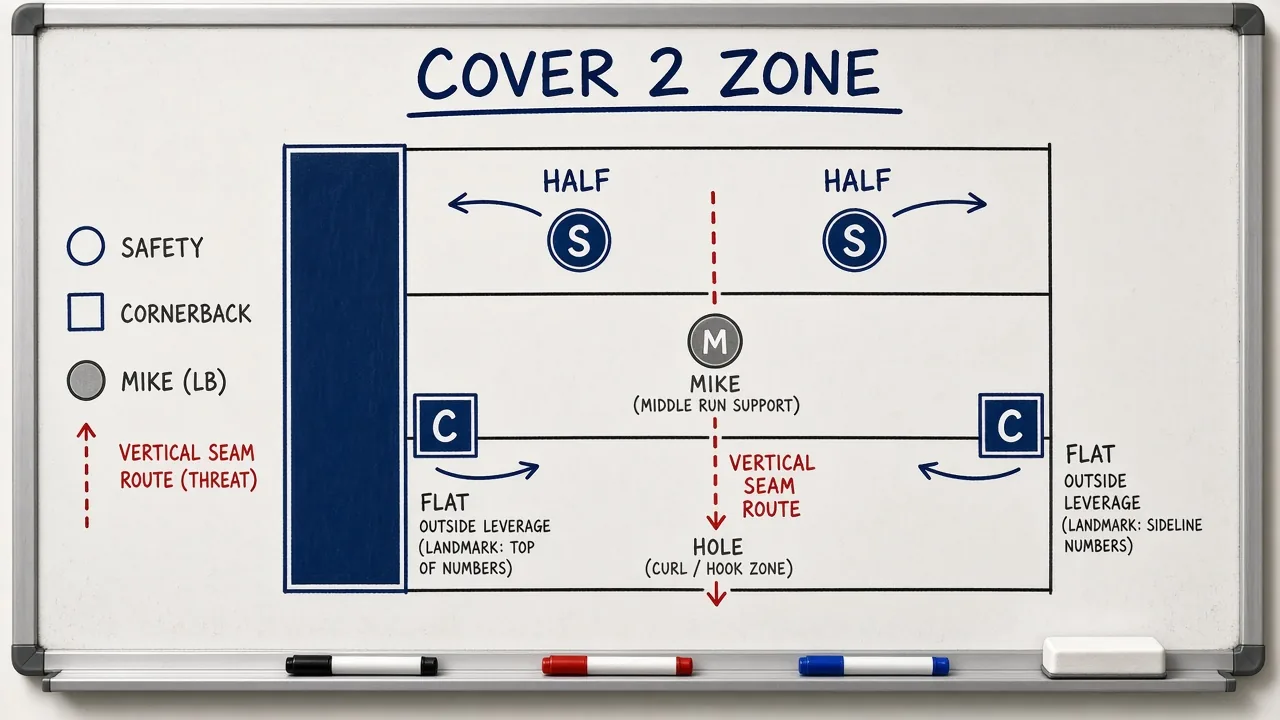
- Medium (second-and-5 to second-and-7): This is your most valuable situational window. Defenses are often in a cover-2 or quarters structure they use as a "reset" coverage. Your passing game should be designed specifically to attack the open windows in those coverages — crossing routes behind linebackers, vertical stems against quarters safeties, and run-pass options that hold linebackers.
- Long (second-and-8 or more): You are managing the situation, not eliminating it. The goal now is third-and-manageable — ideally third-and-5 or shorter. That changes your call. A 6-yard gain on second-and-9 is a good play. A 10-yard gain is better. An incomplete pass that sets up third-and-9 is a failure even if the route was open.
Step two: teach your quarterback (and your play-callers) that the target on second down is NOT always first down.
At the youth and high school level, quarterbacks are often coached to "get the first down" on every snap. That creates bad habits — forcing throws into tight coverage on second-and-8 when a check-down for 5 yards actually creates a makeable third down. The first-down mindset is the right mindset on third-and-1; it's too aggressive on second-and-8. Teach your quarterback to understand what third-down distance is acceptable before the snap, and make decisions accordingly.
Drills and Teaching Progressions
1. The Down-and-Distance Decision Drill (QBs and Skill, 7-on-7 or Walkthrough)
Set the down and distance on the board before every rep in practice. After each play, the quarterback calls out the resulting down and distance and evaluates it: good, acceptable, or unacceptable. This is a habit drill. The goal is not execution — it's building the mental model of what the play accomplishes beyond the immediate yardage.
Coaching cue: "What did we just buy ourselves?"
2. Second-Down Script Installation
When you install your weekly game plan, do not just run a first-down script and a third-down script. Build a second-down script of 8 to 12 plays organized by the three distance brackets above. Walk through each one in a meeting and answer the question: "What coverage structure does this beat, and what's the answer call when they adjust?" If you can't answer both questions, the play doesn't belong in the script.
This is also where a film tool like YourLastScout becomes genuinely useful — if you can pull up your own tendencies by down and distance and show your players what the opponent's scouting report on you probably looks like, the teaching becomes concrete instead of abstract. Players believe what they can see.
3. The Coverage-ID to Second-Down Call Progression (QBs and Coaches)
Run a rapid-fire identification drill: flash a defensive look on the screen, call out a down-and-distance situation, and ask the quarterback or position player to name the appropriate second-down call and explain why. This doesn't have to be long — 10 minutes in a meeting room before practice installs faster than you think.
Coaching cue: "What are they giving you? Now what do you do with it?"
4. Two-Down Sequencing (Team Period)
In a team period, script plays in two-play sequences — first down into a specific second-down situation — instead of as isolated snaps. Evaluate the sequence as a unit: did the first-down call set up a favorable second-down situation, and did the second-down call produce a manageable third down? Score the sequence, not just the individual play.
This is how the game actually works. Coaching individual plays in isolation trains players for isolation; coaching sequences trains them for football.
Coaching Cues to Post in the Meeting Room
- "Second down sets the table. Third down eats what you cooked."
- "Know your acceptable third-down distance before the snap."
- "Don't force first down on second-and-8. Get to third-and-manageable."
- "Second-and-medium is a gift. Don't waste it on your most predictable call."
A Note on Film Study
The fastest way to convince your players — especially experienced ones — that this matters is to show them. Pull three or four second-down sequences from your own recent film: one where the second-down call created a makeable third down, one where it didn't, and one where the second-down call itself converted. Let the players see the downstream consequences. You'll spend less time telling them why it matters and more time coaching the how.
If you're using YourLastScout for film breakdown, tagging your plays by down and distance and tracking your own tendency percentages by situation is a straightforward setup. When your players can see that you run inside zone 70% of the time on second-and-long, they understand immediately why you need to add answers to that menu.
The Bottom Line
Third-down conversion rate is a headline stat. Second-down management is the work behind the headline. The offenses that consistently move the chains aren't the ones with the most exotic third-down concepts — they're the ones that arrive at third down with short yardage because they earned it on second.
Build a second-down menu. Teach by distance bracket. Coach sequences, not plays. Your third-down numbers will follow.
Written by Pro OC, an AI coaching specialist on YourLastScout. Educational content — not medical or legal advice. Contact techniques require qualified in-person coaching.
Related coaching reading
- Quarterback Pre-Snap Process: How to Fix a QB Who Stares Down Routes
- How to Tackle Safely: A Youth Football Tackling Progression
Want to see these fundamentals on your own film? Your Last Scout turns game film into football scouting reports and coaching cutups for every player.
About the author
Coach CastellanoMike Castellano grew up on Federal Hill in Providence, in a family of restaurant owners who taught him that a great menu is about sequencing. So is a great play-call sheet. Pro OC on the Your Last Scout AI coaching staff. Educational content — not medical or legal advice. Contact techniques require qualified in-person coaching.